
Why the Same Word Means Different Things
Most personal finance guides use "budget" and "spending plan" interchangeably, as if they were synonyms. They aren't - at least not in terms of how they feel to the person using them. The math is identical: income minus expenses equals what's left. But the psychology behind each approach is genuinely different, and that difference shapes whether people stick with their system or abandon it by February.
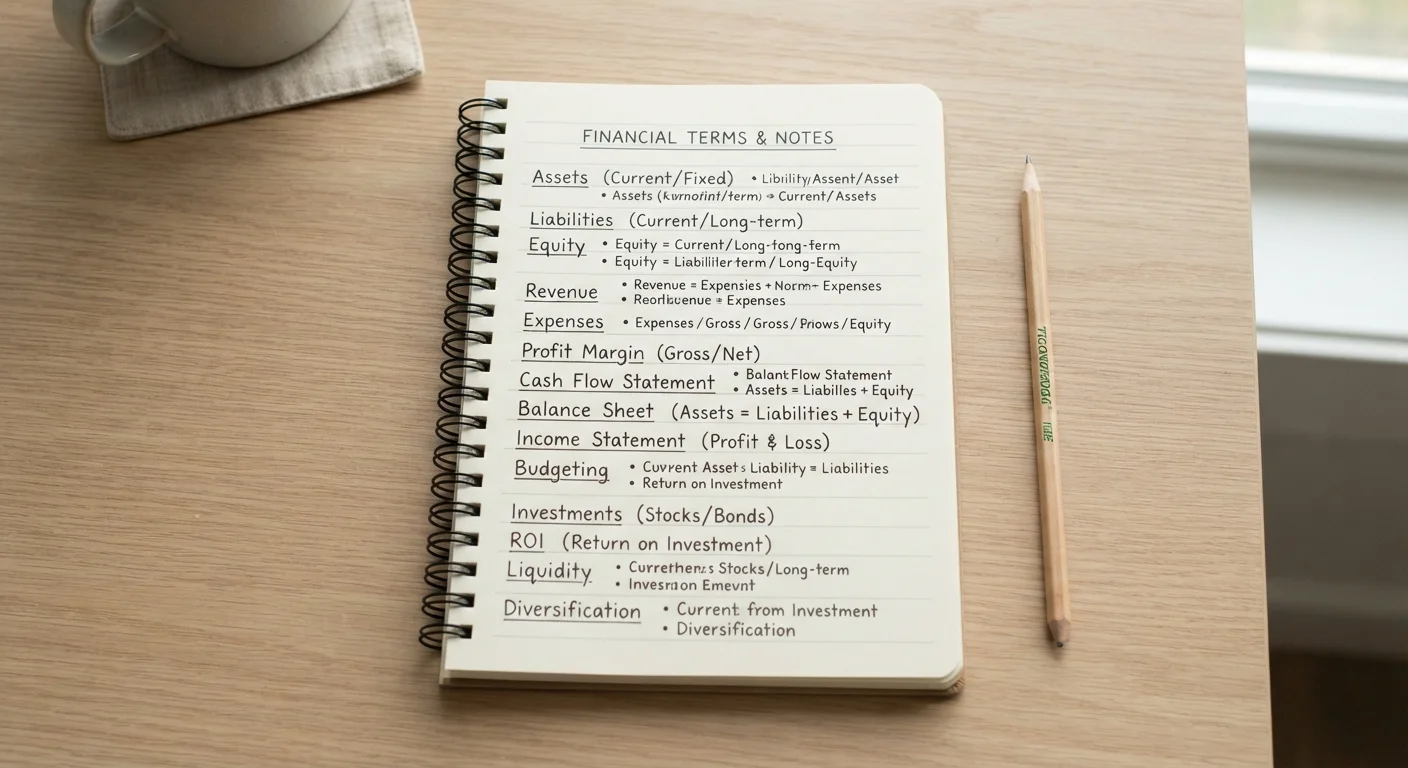
Understanding the distinction isn't about choosing the right vocabulary. It's about choosing the right mindset for your relationship with money. If you've tried budgeting before and it felt punishing or pointless, the framing itself may be part of why. Before diving into any specific method, it's worth grounding yourself in essential budgeting terms so the concepts ahead make immediate sense.
What a Budget Actually Is
In traditional personal finance, a budget is a spending limit - a set of rules that cap what you're allowed to spend in each category. You earn a certain amount, you allocate portions to rent, groceries, transportation, and so on, and you're supposed to stay within those lines. Crossing a line means you've failed the budget.
That framing - rules, limits, failure - is precisely why many people find budgets demotivating. The emotional architecture of a budget positions you as someone who needs to be controlled. Every transaction becomes a test of willpower. Research in behavioral economics consistently finds that people disengage from systems that feel punitive, even when they intellectually understand the value.
Neither Label Is Universally Superior
Personal finance professionals use both terms, and many use them interchangeably. The distinction explored here is primarily psychological and practical - not a formal accounting or regulatory difference. What matters is the mindset behind the system, not what you call it.
This doesn't mean budgets are bad tools. For people who respond well to firm guardrails - or who are managing a very tight income - defined limits can be exactly the structure they need. The issue isn't the budget itself; it's how it's framed and whether that framing matches the person using it.
What a Spending Plan Does Differently
A spending plan starts from the same place - your income - but asks a different question. Instead of "what am I not allowed to spend?" it asks "where do I want my money to go?" Every dollar gets a job before the month begins, assigned by you based on your actual priorities.
This is proactive rather than reactive. You're not tracking whether you violated a rule; you're executing a plan you chose. The language of agency matters here. People who frame financial decisions around values and intentions tend to sustain those decisions longer than those who frame them around restriction. Your discretionary spending choices are a clear reflection of this - they reveal what you actually value, not just where you failed to hold the line.
Try Renaming Your Categories
If certain budget categories trigger anxiety, try renaming them in your own words. Instead of 'Food limit,' write 'Nourishment - $400.' Language shapes emotion. Small shifts in wording can change how you feel about the plan you've built.
A spending plan also tends to make room for enjoyment explicitly. Rather than treating a dinner out as a budget failure, you've already allocated for it. That pre-authorization removes a significant source of financial guilt.
The Real Difference: Restriction vs. Intention
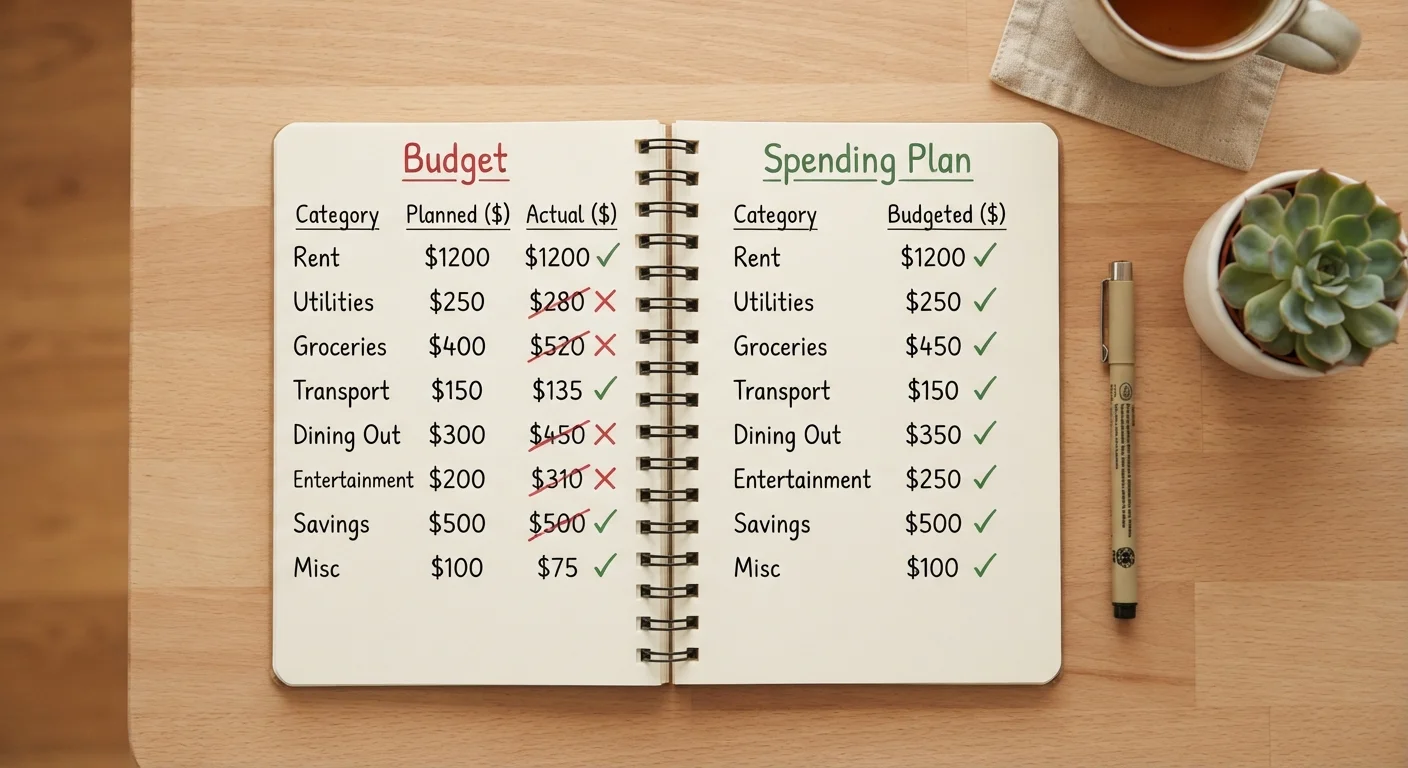
The core distinction comes down to two orientations: restriction versus intention. A budget tells you what you can't do. A spending plan tells you what you've decided to do. The numbers in both documents might look identical - $400 for groceries, $150 for dining out - but one frames those numbers as limits you must not exceed, and the other frames them as decisions you've already made.
~65%
Americans without a formal monthly budget
Gallup polling has consistently found that a majority of U.S. households do not maintain a detailed monthly budget, suggesting that traditional budgeting framing doesn't resonate with most people.
1 in 3
Adults who say budgeting feels restrictive
Consumer financial surveys have found that a significant share of adults associate budgeting with deprivation rather than empowerment, which affects long-term adherence.
This matters practically, not just philosophically. When you think of money as something being rationed, every discretionary purchase carries psychological weight. When you think of money as something you're directing, you spend with less friction and second-guessing. Understanding fixed versus variable expenses helps you build either system on solid ground, since the two expense types behave very differently in any financial plan.
If you're curious how popular frameworks fit each philosophy, comparing the 50/30/20 rule with envelope budgeting shows how structure and mindset interact across two very different methods.
“The goal isn't to have a perfect budget - it's to have a clear, honest picture of where your money is going and whether that matches what actually matters to you.”
— Finance Editorial Team, Personal finance editors specializing in accessible money management
Choosing the Framing That Works for You
The honest answer is: use whichever framing keeps you engaged with your finances. If calling it a spending plan makes you feel more in control and less like you're perpetually grounded, use that. If a strict budget with firm category limits is the only thing that stops you from overspending, use that. The goal is a financial system you return to consistently - not one that looks impressive in a spreadsheet but gets abandoned within weeks.
What matters most is connecting your day-to-day money decisions to your deeper financial values and goals. The label you put on your system is far less important than whether it reflects what you actually care about and whether it's honest about your real numbers.
This article is for general informational purposes only and does not constitute personalized financial advice. For guidance specific to your situation, consider speaking with a licensed financial professional.
This article is for informational and educational purposes only and is not a substitute for personalized financial advice. Consult a qualified financial professional for guidance tailored to your circumstances.