
Why Budgeting Language Matters
You don't need a finance degree to build a working budget - but you do need to understand the words used to describe one. When an article tells you to "allocate discretionary income" or "maintain positive cash flow," those phrases can feel like a wall rather than a window.
This reference cuts through that. The definitions below cover the terms you're most likely to encounter when reading about personal budgets, and each one is explained in plain language. Use this page as a lookup resource whenever you hit an unfamiliar term.
If you're ready to put these concepts into action, start with our plain-language budgeting guide for a practical walkthrough from scratch.
This Is General Financial Information
The definitions and explanations in this article are educational in nature and are not personalized financial advice. Everyone's financial situation is different. For guidance tailored to your circumstances, consult a qualified financial professional.
Core Income Terms
Every budget starts with income - but not all income figures mean the same thing. Confusing gross and net income is one of the most common early mistakes, and it leads to budgets that look balanced on paper but fall short in practice.
| Starting point for any budget | Net income (take-home pay) |
| Two main expense categories | Fixed and variable |
| Healthy emergency fund target (general guidance) | 3-6 months of essential expenses (Consumer Financial Protection Bureau (CFPB)) |
| Common budgeting framework | 50/30/20 rule (needs/wants/savings) |
| Budget surplus use cases | Saving, investing, or debt payoff |
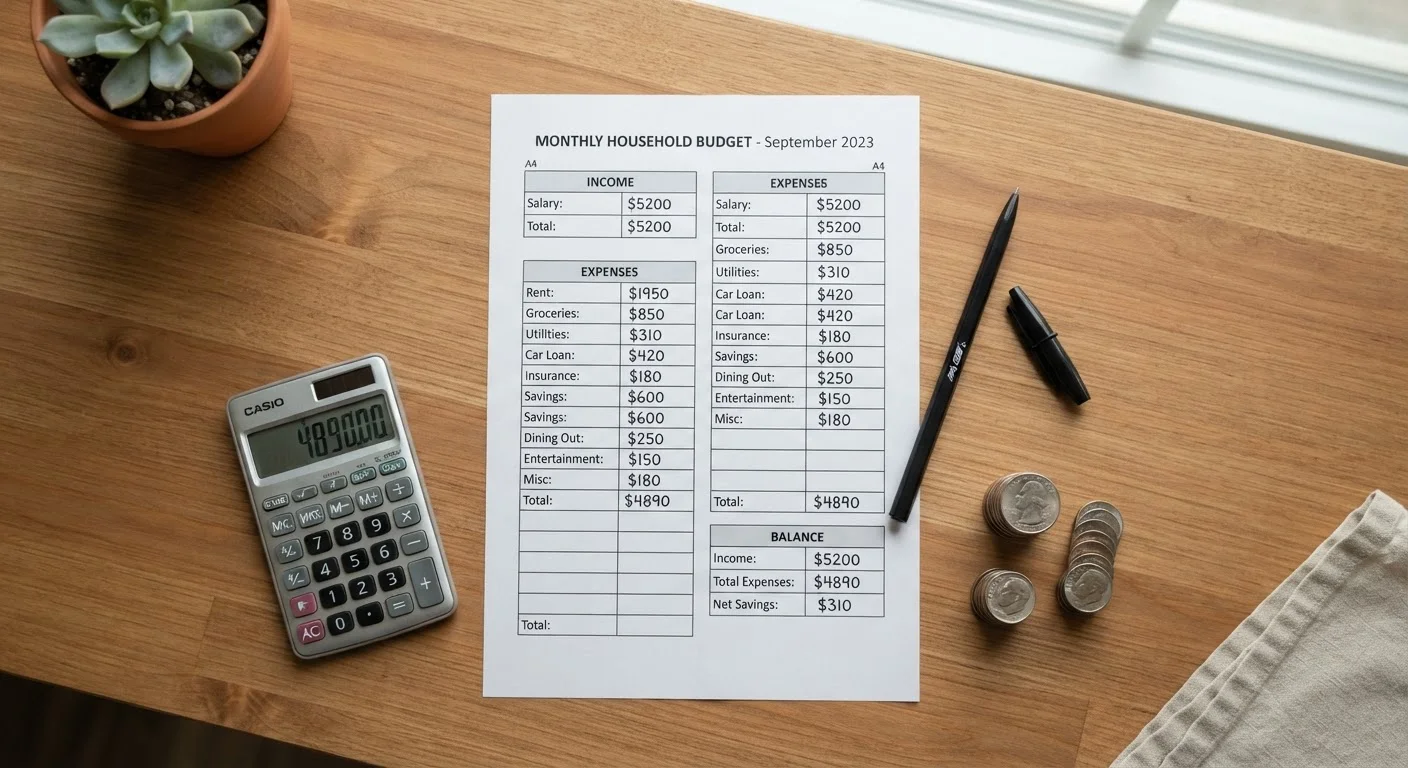
Gross income is your total earnings before anything is taken out. Net income - your actual take-home pay - is what remains after federal and state taxes, Social Security, Medicare, and any other payroll deductions. Your budget must be built on net income, not gross. Spending based on your gross salary is a reliable path to a monthly shortfall.
Cash flow ties income and expenses together over time. If your income across a month exceeds what you spend, you have positive cash flow. If spending outruns income, you have negative cash flow - a signal worth addressing promptly rather than ignoring.
Expense Categories Explained
Expenses fall into a few distinct categories, and knowing which is which shapes every decision you make in a budget.
Net Income
The amount of money you actually take home after taxes, Social Security contributions, and any other payroll deductions are removed from your gross pay. This is the figure your budget should be built around.
Gross Income
Your total earnings before any deductions are taken out. This includes wages, salary, freelance income, or any other source of pay before taxes and withholdings are applied.
Fixed Expense
A recurring cost that stays the same amount each period - rent, a car loan payment, or a monthly subscription at a set rate. Fixed expenses are predictable and easy to plan for.
Variable Expense
A cost that changes from month to month based on usage or behavior, such as groceries, utilities, or dining out. Variable expenses are controllable but require more active tracking.
Discretionary Expense
Spending on non-essential wants rather than necessities - entertainment, hobbies, or travel. These are the costs most commonly adjusted when a budget needs tightening.
Emergency Fund
A dedicated pool of savings set aside to cover unexpected costs - a medical bill, car repair, or job loss - without disrupting regular spending or taking on debt.
Budget Deficit
When your total expenses exceed your total income in a given period. A recurring deficit means you are spending more than you earn and will need to make adjustments.
Budget Surplus
When your income exceeds your expenses in a given period. A surplus creates room to save, pay down debt, or fund future goals.
Cash Flow
The movement of money in and out of your personal finances over a period of time. Positive cash flow means more is coming in than going out; negative cash flow is the reverse.
Pay Period
The recurring interval at which you receive income - weekly, bi-weekly, semi-monthly, or monthly. Knowing your pay period helps align spending categories with income timing.
Sinking Fund
A savings category where you set aside a small amount each month toward a known future expense - a vacation, annual insurance premium, or holiday gifts - so the cost doesn't arrive as a shock.
Zero-Based Budget
A budgeting method where every dollar of income is assigned a purpose - spending, saving, or debt repayment - so that income minus all allocations equals zero. Nothing sits unaccounted for.
Fixed expenses are stable and recurring - rent, a mortgage payment, or a set monthly loan installment. Because the amount doesn't change, they're easy to plan around. Variable expenses shift from month to month: groceries, gas, and electric bills all fluctuate based on behavior and conditions. For a deeper look at how these two categories interact, see our article on fixed vs. variable expenses.
Discretionary expenses are a subset of variable spending - they cover wants rather than needs. Streaming services, dining out, and weekend trips all fall here. These are the most adjustable line items when income drops or a savings goal demands attention.
Savings and Planning Terms
A budget isn't only about tracking what goes out - it also structures how you prepare for the future.
An emergency fund is money set aside specifically for unexpected costs. The Consumer Financial Protection Bureau suggests that three to six months of essential living expenses is a reasonable target, though any amount provides more cushion than none. A sinking fund works differently: it's a planned savings category for a known future cost - annual car registration, holiday spending, or a home repair - broken into small monthly contributions so the expense doesn't arrive as a surprise.
A budget surplus occurs when income exceeds spending in a given period. A surplus is a resource: it can be directed toward debt repayment, savings, or a financial goal. A budget deficit is the reverse - spending exceeds income - and sustained deficits require real adjustments, not just optimism.
Finally, a zero-based budget is a method that assigns every dollar of income to a category until the remainder equals zero. It's a structure, not a restriction - some of those dollars are assigned to savings or spending on things you enjoy. For more on how budgeting methods fit different life circumstances, explore budgeting approaches across different life stages.
For a broader vocabulary covering savings and debt terms - compound interest, APR, net worth - the debt and savings glossary is a useful companion to this page.
This article is for general informational and educational purposes only and does not constitute personalized financial advice. Consult a qualified financial professional for guidance specific to your situation.