
Why Mirrors Leave Gaps
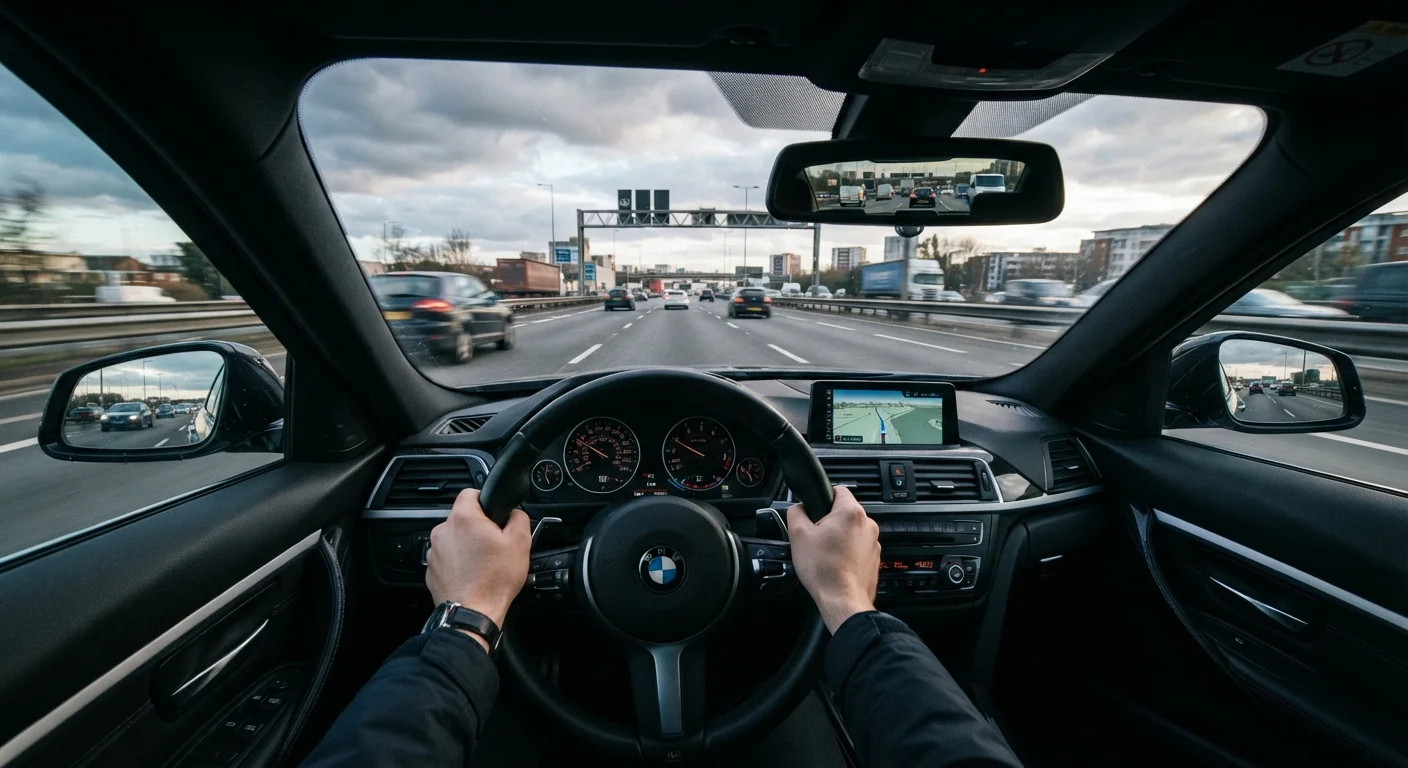
Your three mirrors - rearview, driver's side, and passenger's side - cover a wide arc behind and beside your vehicle. But they don't form a seamless picture. Each mirror captures a specific field of view, and where those fields end, blind spots begin.
The most significant gaps typically sit in the rear-left and rear-right quadrants: the zones just behind your rear doors where a motorcycle or compact car can sit without appearing in any mirror. Because the rearview mirror focuses on what's directly behind you, and the side mirrors angle outward from the rear corners, a narrow but very real band of road falls in between them.
Understanding this isn't about making you anxious - it's about making the gap predictable. Once you know exactly where the coverage stops, you know exactly where to look.
Blind Spot Monitoring Has Limits
Many newer vehicles include blind spot monitoring systems that alert you when a vehicle enters the side blind zone. These systems are a genuine aid, but they can miss fast-approaching vehicles, cyclists, and objects in poor weather conditions. They're best treated as a backup, not a primary safety tool.
How Mirror Adjustment Changes the Picture
Most drivers set their side mirrors too far inward, reflecting a wide view of their own car's doors. This feels reassuring, but it wastes coverage. A properly positioned side mirror should show only a sliver of your own vehicle at the inner edge, with the majority of the mirror's view directed into the lane beside you.
The rearview mirror should frame the full rear window. If your vehicle has a wide C-pillar or a small rear window - common in SUVs and crossovers - you'll notice how much real estate disappears from view even in a well-adjusted mirror.
Adjust Mirrors Before Every Drive
Mirror position shifts subtly when different drivers use the car or when you adjust your seat. Take five seconds before setting off to confirm all three mirrors are aligned for your current seating position. It's a small habit with a meaningful payoff.
Better mirror positioning shrinks your blind spots meaningfully. It does not eliminate them. That distinction matters every time you merge.
The Head Check: Filling What Mirrors Miss
A shoulder check - briefly turning your head to look directly into the blind spot zone before a lane change - is the only reliable method to confirm the space is clear. It takes less than a second. Done consistently, it becomes muscle memory rather than a deliberate effort.
The check works because your eyes can cover the angle that no mirror reaches. Turn your head about 45 degrees toward the side you're moving into, look for vehicles in that rear quarter, and then proceed if clear.
840,000+
Annual blind spot-related crashes in the US
The National Highway Traffic Safety Administration (NHTSA) has estimated that hundreds of thousands of crashes per year involve blind zone factors, including lane-change and merging scenarios.
~28%
Of rear area invisible without a head check
Studies on mirror coverage geometry suggest that a meaningful portion of the zone behind and beside a typical sedan falls outside the combined field of all three mirrors when set to standard factory positions.
For drivers new to confident highway driving, see our guide for first-time car owners - it covers mirror basics alongside other foundational skills worth locking in early.
When Conditions Make Blind Spots Worse
Blind spots aren't a fixed-size problem. Conditions expand or shrink how dangerous they are in practice. Rain, fog, and darkness all reduce how much you can see when you do perform a head check. A vehicle that's hard to see in good light - a dark-colored motorcycle, for example - becomes even harder to detect in poor visibility.
Large loads, roof boxes, or rear-window cargo all block your rearview mirror's field further. Towing a trailer effectively eliminates your rearview mirror as a useful tool and pushes you to rely entirely on your side mirrors.
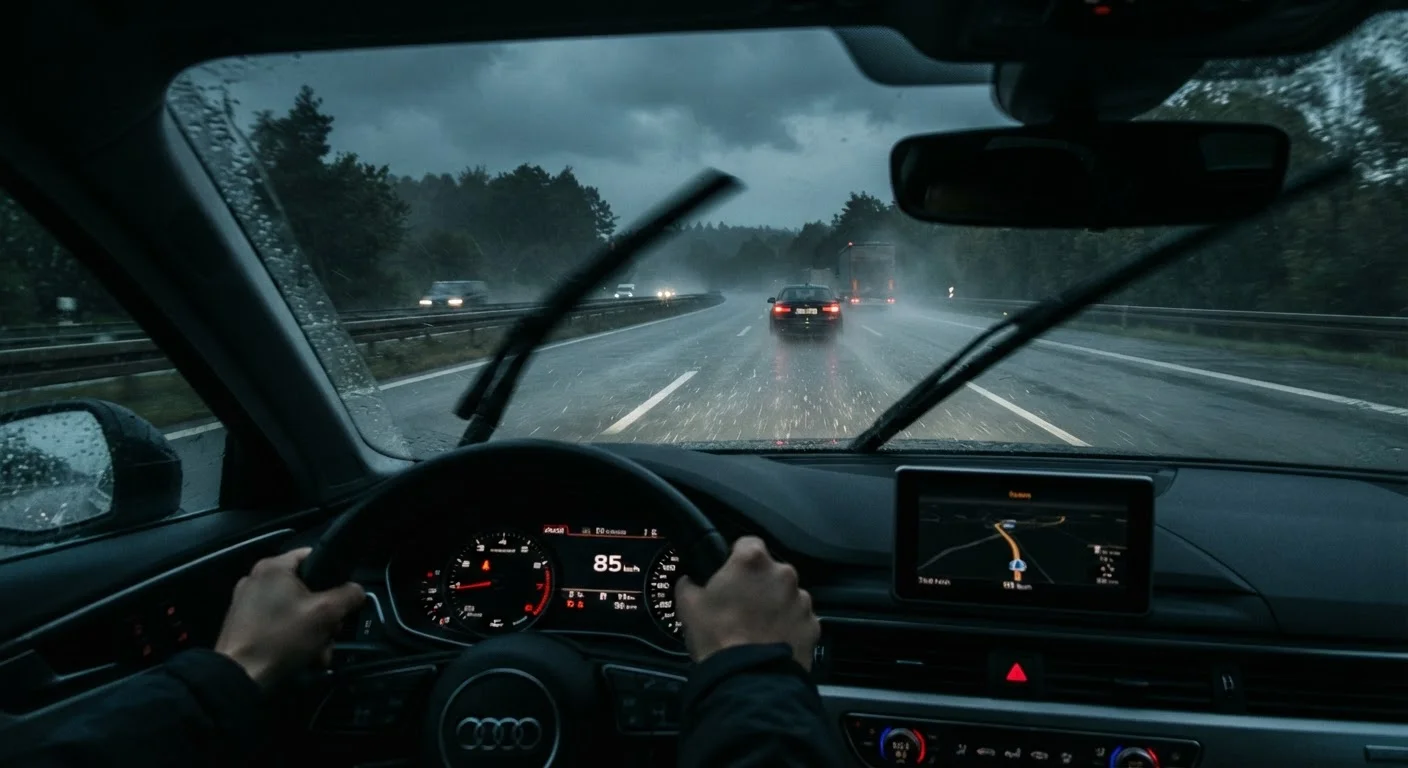
Bad weather compounds every visual limitation. Our article on driving in rain, fog, and snow covers how to adapt your habits when conditions reduce what you can see. Before long trips, a pre-journey vehicle check - including mirror inspection - is worth building into your routine.
This article is for general informational purposes. Always follow applicable traffic laws and consult your vehicle's owner manual for mirror adjustment guidance specific to your make and model.