
What Each Format Actually Does Well
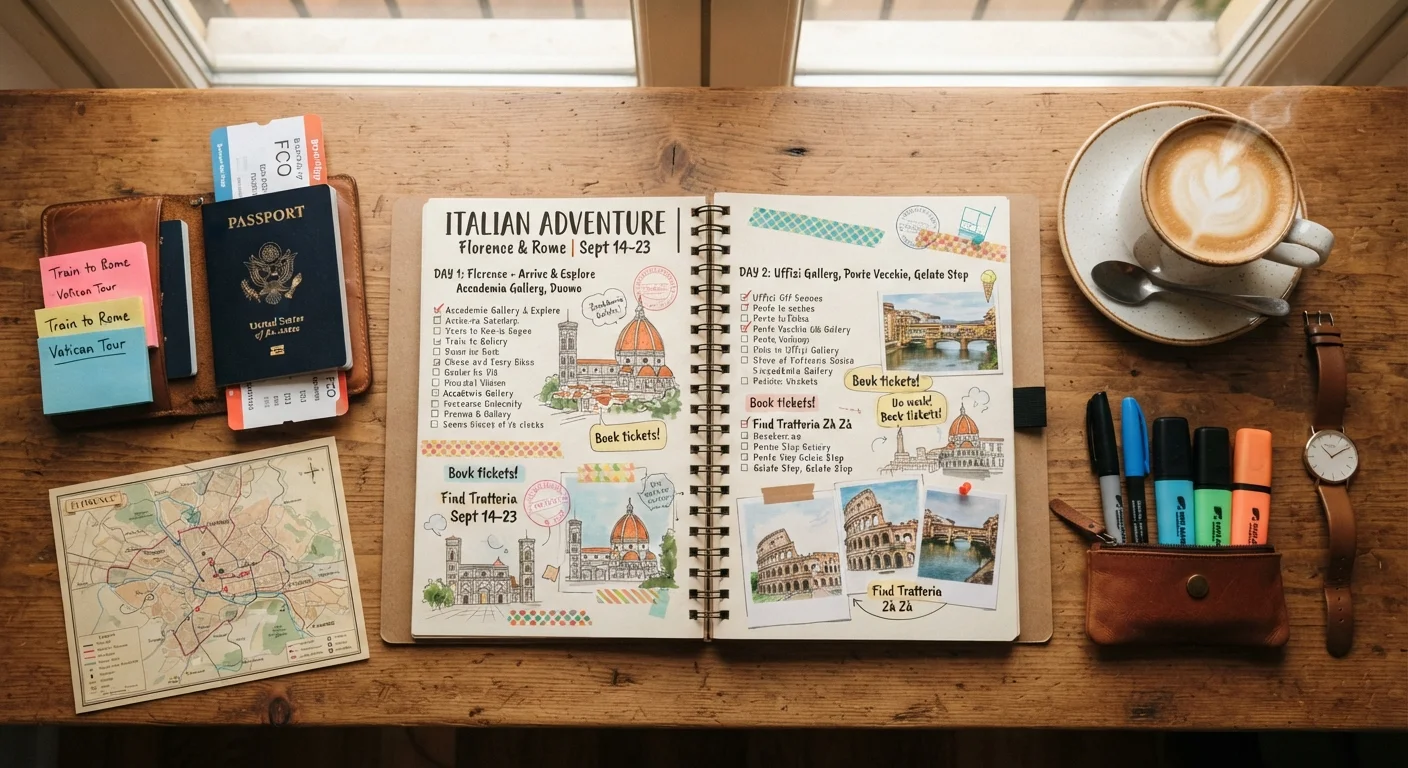
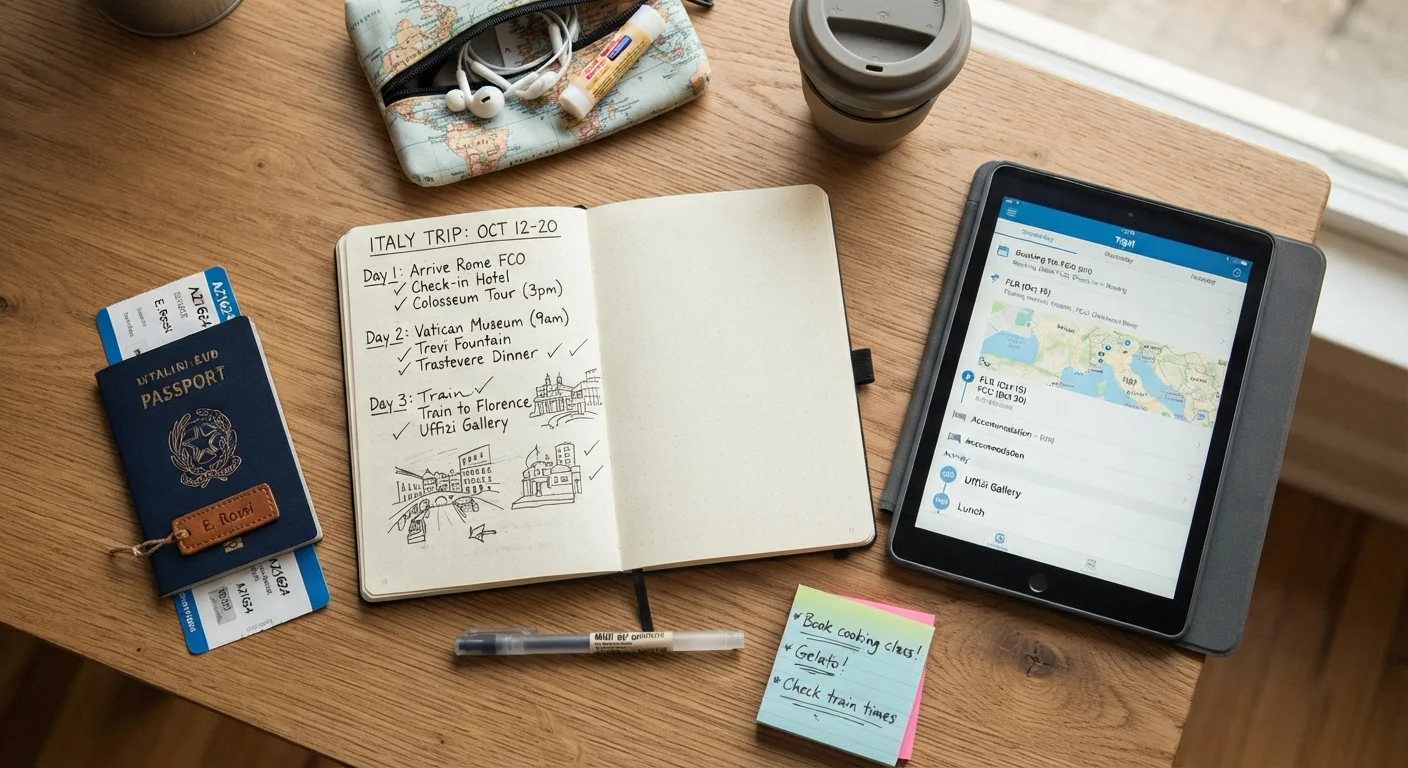
Before comparing the two head-to-head, it helps to understand the distinct jobs each format handles naturally. Digital tools - travel apps, spreadsheets, cloud document editors - are fundamentally built for information management at scale. They can hold flight confirmation numbers, hotel check-in times, restaurant reservations, and currency converters all in one place. Paper planning, by contrast, trades breadth for depth: it slows you down in a useful way, encouraging more deliberate thinking about what a trip actually needs to contain.
If you're building a well-structured travel itinerary, the format you choose affects not just where you store information, but how thoroughly you process it in the first place.
Real-time updates keep all details current
Flight delays, address changes, and last-minute additions can be updated instantly across a shared digital document, ensuring every traveler sees the most accurate version.
Centralises bookings, documents, and maps
A single app or folder can hold confirmation emails, offline maps, currency converters, and packing lists - reducing the risk of missing critical details at check-in.
Easy to share with travel companions
Shared cloud documents or itinerary apps eliminate the need for one person to relay information manually, which matters especially on group trips.
Paper survives battery death and connectivity gaps
A printed itinerary or handwritten notebook requires no power, no signal, and no login - a meaningful advantage in remote areas or during long travel days.
Slower pace encourages more deliberate planning
Writing by hand forces you to prioritise and condense information, which often results in a cleaner, more realistic itinerary than one built by copy-pasting links.
No distraction from notifications or other apps
A notebook stays a notebook - it doesn't interrupt your planning session with unrelated alerts or redirect your attention to social media.
Where Digital Tools Fall Short
Digital planning comes with friction that's easy to underestimate until you're mid-trip. Battery life, data roaming costs, and app crashes are logistical vulnerabilities that paper simply doesn't share. There's also the distraction factor: opening a travel app on your phone often means navigating past notifications, social feeds, and the general pull of the internet - none of which helps you concentrate on finalising a train timetable.
App overload is a real concern too. If you're juggling separate tools for flights, accommodation, maps, currency, and packing, the system becomes harder to maintain than the trip itself. For a practical look at reducing that friction, see organising your digital life.
Device dependency creates single points of failure
A dead battery, cracked screen, or stolen phone can eliminate access to your entire itinerary at once - a risk paper copies spread across a travel companion can mitigate.
Too many apps fragment rather than organise
Using separate tools for flights, maps, accommodation, and packing can create more complexity than a single notebook, particularly if the apps don't sync with each other.
Paper is difficult to update after changes
Crossed-out entries and re-printed pages accumulate quickly on longer or more fluid trips, making paper planning harder to maintain when plans shift frequently.
Digital tools require a learning curve
Setting up and maintaining a travel-specific app or shared spreadsheet takes time and some technical comfort - effort that may not be justified for simple, short trips.
Paper is hard to share across multiple travelers
Photocopying or photographing handwritten notes introduces errors and creates version-control problems when plans change after distribution.
The Case for Going Hybrid
In practice, the travelers who report the least planning stress tend to use both formats with intentional boundaries. A common approach: paper for the brainstorming and early-stage research phase, digital for the operational layer once bookings are confirmed. Written packing lists and hand-drawn neighborhood maps sit comfortably in a notebook. Confirmation emails, shared hotel addresses, and real-time flight tracking belong on a device.
A Simple Hybrid Framework
Consider keeping a small notebook for brainstorming, priority rankings, and packing lists - things that benefit from slow, focused thinking. Reserve your digital tools for anything involving a confirmation number, a shared document, or a time-sensitive update. This division of labor keeps each format doing what it genuinely does well, rather than asking either one to handle everything.
Group trips in particular benefit from digital-first logistics - shared documents mean every traveler sees the same departure time without relying on one person to field every question. For more on how group dynamics reshape the planning process, see planning a solo trip vs. group travel.
Solo travelers and shorter domestic trips are where paper can carry more of the load comfortably. The stakes of a missed update are lower, and a single printed sheet often covers everything needed for a weekend trip.
~60%
Travelers using smartphones as primary planning tool
Surveys by major travel industry research groups consistently find that a majority of leisure travelers in the US rely on smartphones as their central planning and booking device.
1 in 3
Travelers keeping a paper backup of key trip details
Despite widespread digital adoption, a notable share of travelers still print or handwrite critical details like hotel addresses and emergency contacts as a failsafe.
Choosing Based on Your Trip Type
A few practical questions can steer your decision. First, how dynamic is your itinerary? A multi-city international trip with layovers and pre-booked experiences changes frequently enough that a digital document - one you can edit from anywhere - is genuinely useful. A road trip with two stops and loose scheduling rarely needs more than a handwritten page.
Second, who else is involved? If you're coordinating across multiple travelers, digital sharing removes a significant communication burden. The trade-offs between spreadsheet-style and app-based coordination are worth thinking through carefully - the same logic explored in spreadsheet budgeting vs. app-based budgeting applies directly to travel planning tools.
Finally, consider your destination's connectivity. If you're heading somewhere with limited data access, a printed backup of key details isn't paranoid - it's just sensible planning. Whatever system you choose, find more travel tips and practical habits to round out your preparation.