

Where the Planning Process Actually Splits
At first glance, trip planning looks the same regardless of who's going: pick a destination, book flights, arrange accommodation. But the moment you factor in a second (or fifth) traveler, the process multiplies in complexity. Understanding where the two paths diverge saves you from applying the wrong framework to your trip.
Solo travel is fundamentally a single-player game. Every decision - destination, dates, daily pace - belongs to one person. That efficiency is the solo format's greatest strength. Group travel, by contrast, is a negotiation. Even a trip with two people introduces competing preferences, budget differences, and scheduling constraints that require structure to manage.
For a deeper look at what makes an itinerary hold together under either format, see the anatomy of a well-built travel itinerary.
| Solo Travel | Group Travel | |
|---|---|---|
| Decision-making speed | Immediate - one person decides | Slower - requires group consensus |
| Booking lead time needed | Shorter window often workable | Longer lead time typically required |
| Budget management | Simple, individual control | Complex, requires shared agreements |
| Itinerary flexibility | High - pivot freely anytime | Low - changes affect everyone |
| Coordination overhead | Minimal | Significant - needs a point person |
| Accommodation options | Wide range, easier to book late | Needs larger or multi-room options |
Logistics and Booking Timelines
Solo travelers can often book closer to departure and still secure workable options. A single flight seat, one hostel bed, or a small rental unit tends to remain available longer than multiple seats or multi-room accommodations. This gives solo planners a genuine flexibility advantage.
Group bookings operate on a different clock. Securing five airline seats together on the same flight - especially at comparable price points - typically requires more lead time. The same applies to vacation rentals large enough to fit everyone, or restaurant reservations at popular spots. A general planning principle: the larger the group, the earlier the booking process should start.
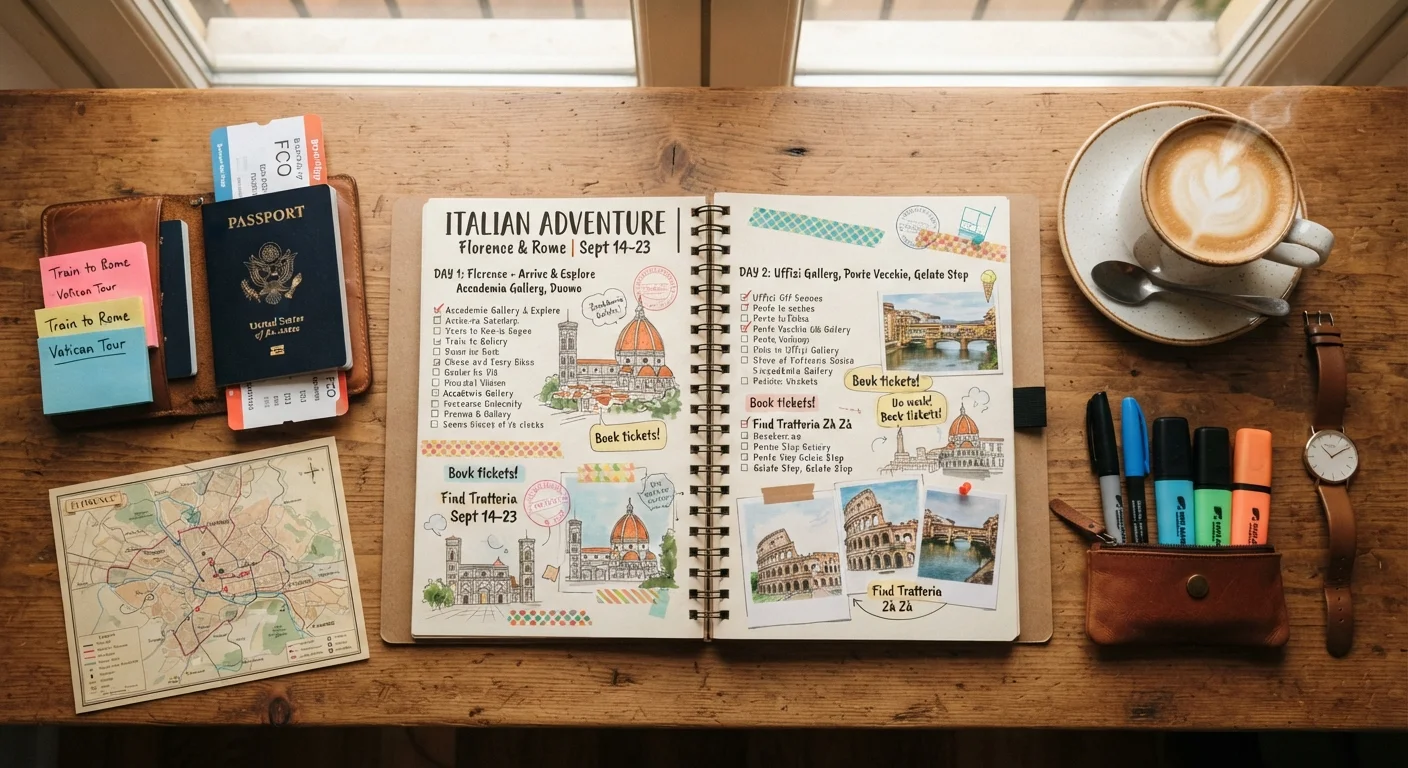
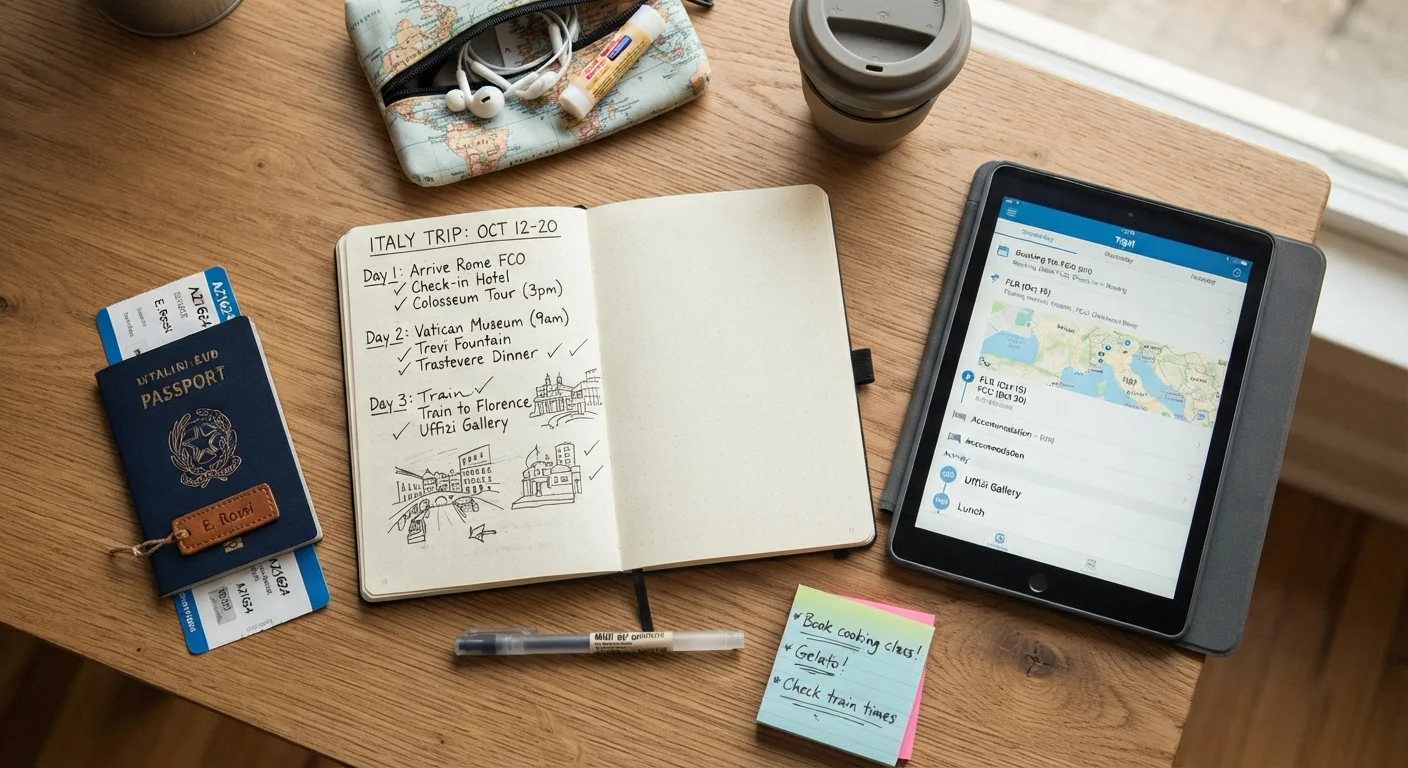
Groups also need a single point of coordination. Without a designated organizer, booking decisions stall in group chats and email threads. Assigning one person to hold reservations and collect payments from others is one of the most practical structural decisions a group can make early on. Digital planning tools vs. paper systems can make this coordination significantly more manageable.
Assign a Group Trip Coordinator Early
Before any bookings are made, designate one person as the primary organizer for a group trip. This person holds reservations, communicates deadlines, and collects payments - removing the ambiguity that causes group trips to stall. Rotate the role on future trips if fairness is a concern.
Budgeting: Individual Control vs. Shared Expense Complexity
Solo budgeting is direct: set an overall number, allocate across flights, lodging, food, and activities, and track against that figure. You spend what you decide to spend, and mid-trip adjustments affect only you.
Group budgets introduce variables that solo travelers never face. Different travelers have different financial comfort zones. One person may want a mid-range hotel; another is comfortable in a shared hostel. Shared expenses - a group rental car, a vacation home, a joint dinner - require upfront agreement on how costs will be split and a reliable method for settling up. Informal arrangements often create friction later in the trip.
1 in 4
American travelers who have taken a solo trip
According to data cited by the Adventure Travel Trade Association, solo travel has grown steadily as a share of overall leisure travel in North America.
3-4 months
Typical advance planning window for group trips
Travel industry research generally suggests groups of four or more benefit from starting logistics planning three to four months before departure.
Establishing a shared budget document before departure, even a simple spreadsheet, helps avoid assumptions. Deciding in advance whether you'll split everything equally or pay individually wherever possible prevents the most common group travel conflict.
Decision-Making and Itinerary Flexibility
Solo travelers can change plans without consequence to others. If a city feels right for an extra day, stay. If a planned activity falls flat, skip it. This on-the-fly adaptability is one of the most cited reasons people choose to travel alone. If you're weighing whether to start with a solo trip, solo travel from zero is a useful starting point for first-timers.
Group itineraries carry more inertia. Once a schedule is agreed upon and bookings are in place, changing course means re-coordinating everyone - sometimes across different comfort levels, energy levels, or interests. Building deliberate buffer time into a group itinerary (free afternoons, optional activities, flexible meal windows) reduces conflict when the group inevitably splits into sub-interests.
Timing also shapes the trip in ways that go beyond the group dynamic itself. Planning around seasons, crowds, and local events matters for both formats but hits groups harder, since last-minute pivots to avoid peak crowds are far easier solo.
Whether you travel alone or with others, the destination choice sets the tone for how smoothly the planning process flows. For those weighing their first independent trip, the domestic vs. international first trip debate applies equally to solo and group formats.