
Why Packing Method Actually Matters
Most travelers default to whatever method feels intuitive - usually folding - without considering how bag type, trip length, and clothing choices change the equation entirely. The result is overstuffed bags, wrinkled shirts, and items lost at the bottom of a suitcase.
The three dominant methods - packing cubes, compression bags, and rolling - each solve different problems. Understanding what each one actually does (and doesn't do) lets you make a deliberate choice instead of a habitual one. For travelers planning more complex itineraries, pairing smart packing with solid logistics planning is equally worthwhile. See how to build a realistic trip budget before you even reach the packing stage.
| Packing Cubes | Compression Bags | Rolling | |
|---|---|---|---|
| Primary benefit | Organization and access | Volume reduction | Space efficiency, no extra gear |
| Best clothing type | Any; especially mixed items | Bulky, wrinkle-resistant layers | Casual, wrinkle-resistant fabrics |
| Wrinkle risk | Low | High | Moderate |
| Mid-trip access | Easy | Difficult (must recompress) | Moderate |
| Best trip type | Multi-stop, long trips | Cold-weather, adventure travel | Weekend, carry-on trips |
| Extra cost/weight | Small added weight and cost | Moderate cost, pump needed | None |
| Works in soft bags | Depends on cube size | Yes | Yes |
Packing Cubes: Built for Order, Not Always Space
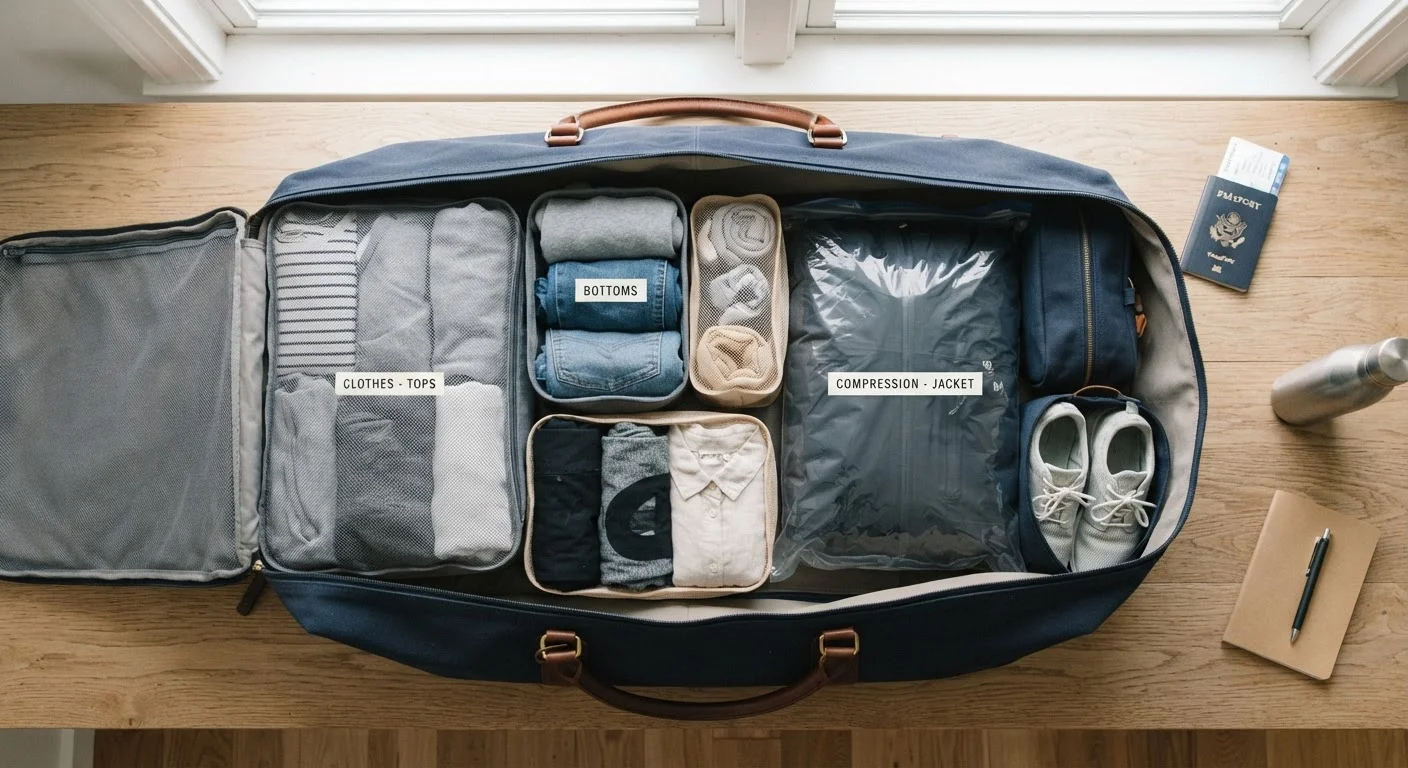
Packing cubes are zippered fabric containers that segment your bag into zones - one for shirts, one for bottoms, one for underwear and socks. Their primary value is organization and retrieval speed, not compression. Most standard cubes don't reduce the volume of your clothes at all.
They shine on multi-stop trips where you're living out of your bag rather than unpacking into a hotel dresser. Pulling out one cube to find a specific item beats digging through an entire suitcase. They also help when sharing a bag or hotel room, keeping each person's items clearly separated.
Where cubes fall short: soft-sided bags with irregular shapes don't always accommodate cube dimensions neatly, and stuffing a cube too full defeats the zippered closure. They also add a small amount of weight - worth noting if you're traveling carry-on only with tight weight limits.
Cube Size Matters More Than Count
A single large cube stuffed past capacity is harder to zip and wastes the cube's structure. Opt for a set with varied sizes - small for accessories, medium for bottoms, large for tops - and fill each to about 80% capacity. This keeps zippers intact and makes cubes easier to slot into irregular bag shapes.
Compression Bags: Maximum Volume Reduction, Real Trade-offs
Compression bags - whether vacuum-seal style or roll-to-compress - can meaningfully shrink bulky items like fleeces, down jackets, and sweaters. For cold-weather or adventure travel, they're often the only practical way to fit a week's worth of layers into a single checked bag.
The trade-offs are real, though. Compression crushes fabric, which means wrinkles are unavoidable - this method is poorly suited to dress shirts, blazers, or linen. Items also come out in a compressed block, so mid-trip access to anything inside means re-compressing when you repack. Vacuum bags additionally require a pump or a flat surface to roll against, which isn't always available on the road.
Compression Can Damage Delicate Fabrics
Wool, silk, and structured garments like blazers or dress shirts should never go into compression bags. The sustained pressure crushes fibers and creates deep creases that don't shake out easily. Reserve compression exclusively for synthetics, fleece, and down - materials that recover their shape once released.
Compression bags work best as a one-directional tool: compress bulky layers for the outbound trip, and accept that the return journey may need a larger bag or checked luggage if you've acquired items along the way.
Rolling: The Reliable Baseline
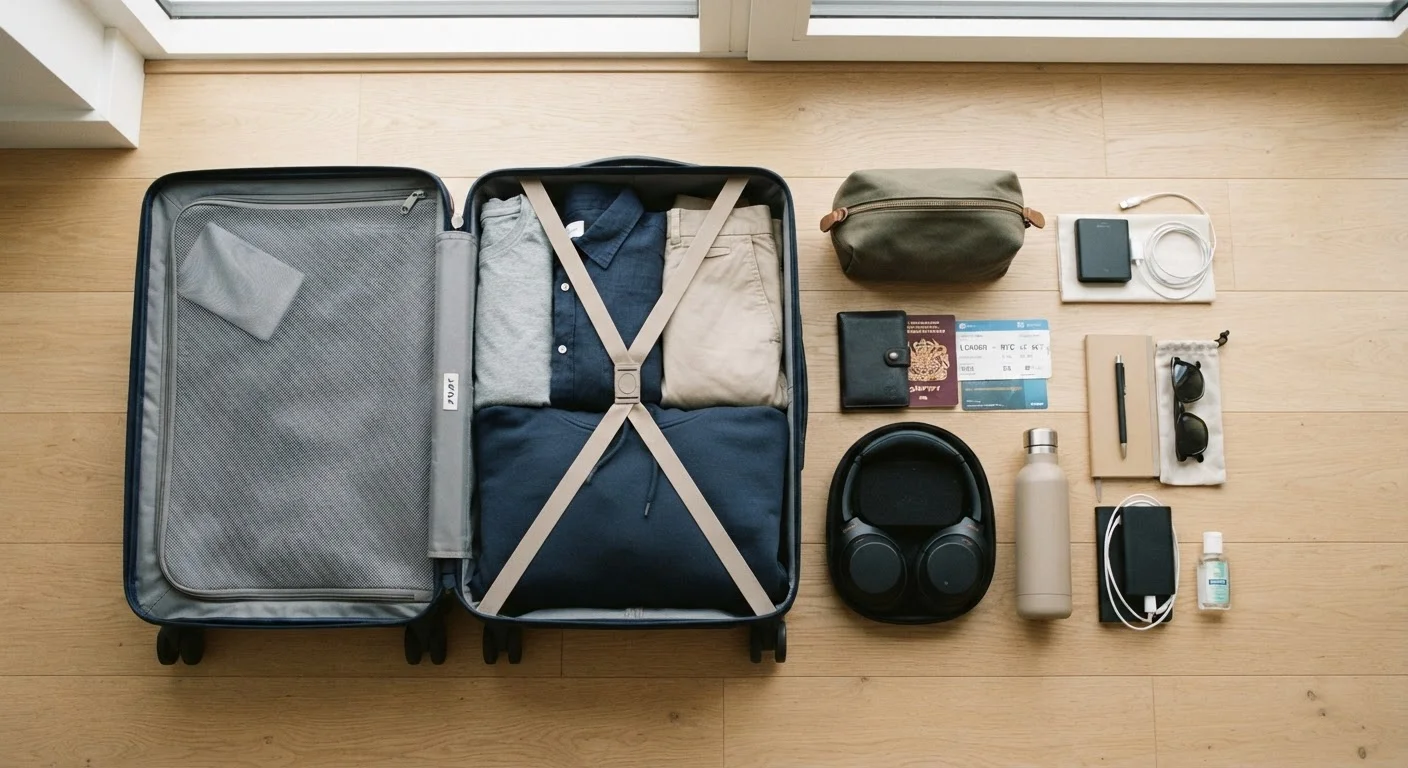
Rolling clothes - tightly, from one end to the other - is the oldest space-saving trick in travel. It genuinely works for casual, wrinkle-resistant fabrics: t-shirts, jeans, athletic wear, casual pants. Rolling reduces air pockets and allows items to fit along the curved interior edges of soft bags more efficiently than flat folding.
It's also free, weightless, and requires no additional gear. For a weekend trip with a duffel or backpack, rolling alone may be all you need. For a two-week trip with varied outfits, it becomes less practical as the number of items scales up and retrieval gets messy.
The consistent limitation: rolling doesn't prevent wrinkles in structured or formal clothing. A rolled blazer still arrives creased. For those items, flat folding inside a packing cube - or leaving them out entirely - is more practical. Travelers focused on efficient packing decisions might also apply similar thinking to small-space storage at home, where the same principle of matching method to item type holds.
How to Combine All Three Effectively
The most effective packing approach for most trips isn't one method - it's layering all three by item type:
- Compression bags for bulky cold-weather layers stored at the base of the bag
- Rolling for casual everyday clothes packed around and above compressed items
- Packing cubes for small items (underwear, socks, accessories) and anything you'll need frequent access to
Keep essential documents in your carry-on and outside any cubes or compression bags - fast access matters at borders and check-in counters. If your trip is organized enough to warrant digital or paper itinerary tools, your packing list should be part of that system too.
The goal isn't a perfectly packed bag - it's a bag that works for how you actually travel.