
Why Frequent Flyers Abandon Checked Bags
Experienced travelers don't skip checked bags out of stubbornness - they skip them because the math almost always works in their favor. No baggage fees, no carousel wait, no risk of lost luggage on a tight connection. The trade-off is a stricter packing discipline, and most frequent flyers say it takes only one or two trips to get comfortable with it.
A number of widely-held baggage beliefs keep travelers over-packing by default - the idea that longer trips demand more clothing, or that every scenario needs its own outfit. Neither holds up under scrutiny. What matters more is picking the right framework before you touch a single item of clothing.
“The goal of traveling is not to bring your home with you. Every item in your bag should earn its place by serving multiple purposes or being genuinely irreplaceable.”
— Rick Steves, Travel author and educator known for advocating carry-on-only travel in Europe
The Category-Limit System
Rather than writing a packing list and hoping everything fits, frequent flyers work from fixed category limits. A typical system looks like this: three to four bottoms, five to six tops, one layer for warmth, two pairs of shoes (one worn on the plane), and a toiletry kit that fits within the TSA's 3-1-1 liquids rule - one quart-sized bag, containers no larger than 3.4 ounces each.
Every category has a hard ceiling. If a new item needs to come in, an existing item goes out. This constraint forces honest evaluation: is this item truly necessary, or is it just a comfort backup you've never actually used?
Set a firm numerical limit for each clothing category before you start packing.
Open-ended packing lists grow by default - there's always one more 'just in case' item. A ceiling per category makes every choice deliberate and keeps the bag manageable without constant re-evaluation.
Pack your bag, then remove two items before closing it.
Most people pack to capacity and discover redundancy only once they're on the road. Proactively removing two items after packing builds in the buffer that prevents overstuffed, hard-to-close bags.
Wear your bulkiest items on travel days rather than packing them.
Boots, heavy jackets, and thick sweaters take up disproportionate bag space relative to their wear frequency. Wearing them on the plane frees room for lighter, more versatile items.
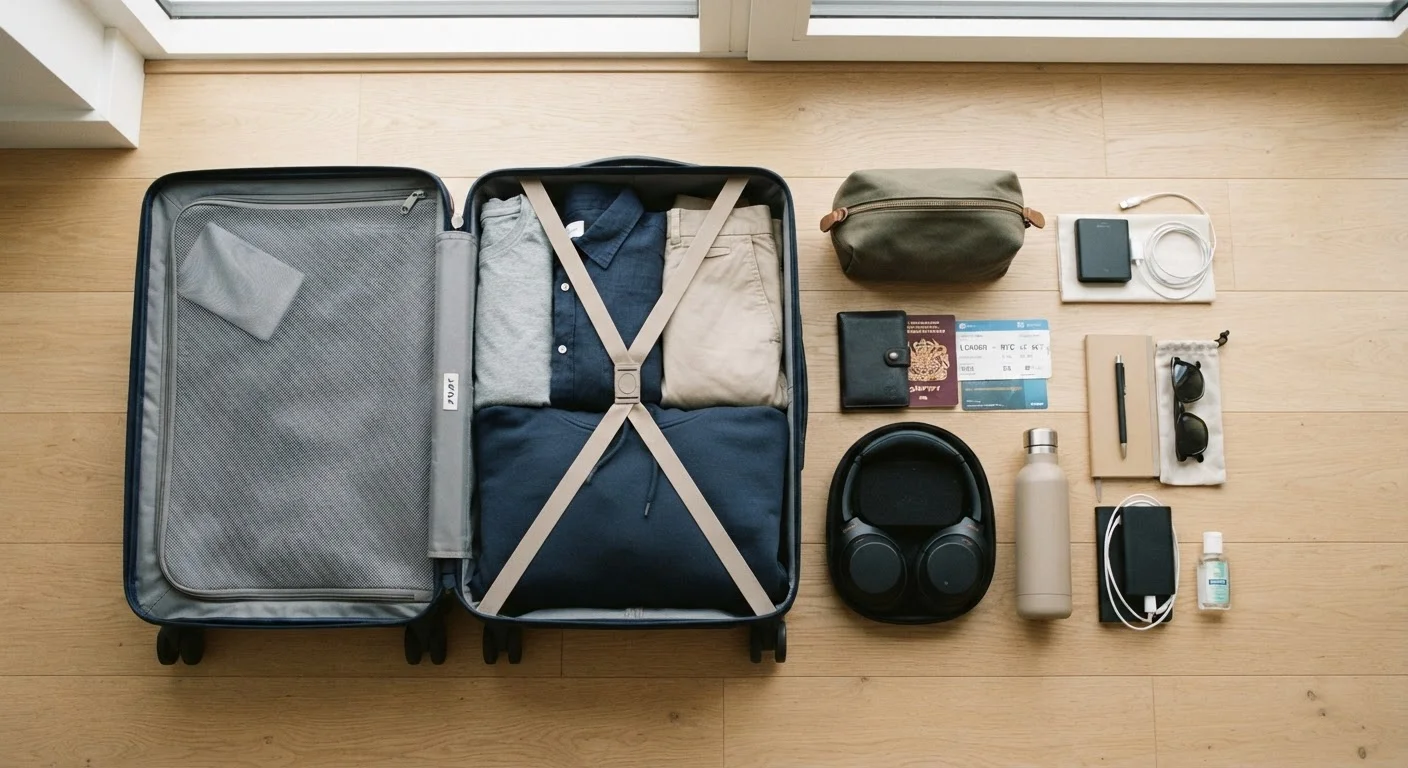
Use a dedicated tech pouch with pre-set contents that never changes.
Electronics and cables are easy to over-accumulate. A fixed pouch with a standard loadout - charger, adapter, earbuds, small power bank - removes the temptation to throw in extras 'just in case.'
Research your destination's laundry options before finalizing your packing list.
Access to laundry - hotel service, laundromat, or in-room sink washing - directly affects how many clothing items you actually need. Knowing your options lets you confidently pack less.
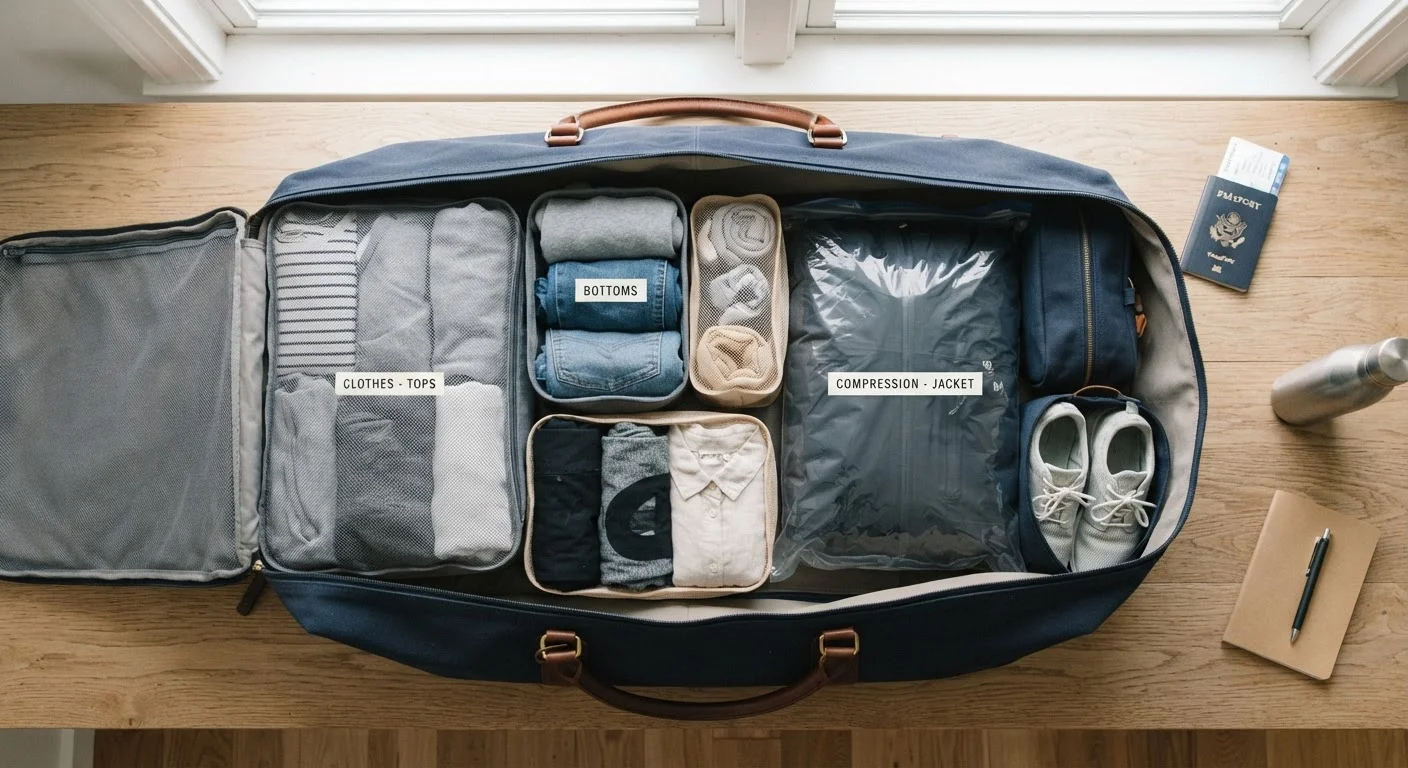
For organization inside the bag, the method you choose matters as much as what you pack. Rolling compresses soft items efficiently; packing cubes keep categories separated so you're not unpacking the entire bag at every stop.
Smart Clothing Choices That Do the Heavy Lifting
Clothing selection is where most packing plans succeed or fail. Frequent flyers gravitate toward a few principles:
- Neutral palette: Navy, grey, black, and tan mix easily across every item, so five tops and three bottoms produce many more wearable combinations than a mix of statement pieces.
- Fabric weight and wrinkling: Merino wool and synthetic-blend fabrics pack small, regulate temperature, and resist odor - meaning the same shirt can be worn two days running without obvious wear.
- Layering instead of bulk: One lightweight packable jacket replaces both a sweater and a heavier coat on most trips.
Shoes are the hardest item to limit because they're bulky and context-specific. Most experienced carry-on travelers settle on one versatile pair worn at the airport (walking-appropriate and smart enough for a dinner out) plus one compact alternative - sandals, packable flats, or a pair of lightweight sneakers.
Test Your Outfit Combinations Before You Pack
Lay out all clothing items side by side and physically count the number of complete outfits they produce together. If you can't make at least ten combinations from your clothing selection, you either need to swap in more versatile pieces or reconsider the mix. This visual check takes five minutes and reliably reveals dead weight before it enters the bag.
Toiletries: Where Bags Get Heavy Fast
Toiletry kits routinely exceed carry-on liquid limits and add unnecessary weight. The shift frequent flyers make is moving toward solid-format products where practical - shampoo bars, solid conditioner, and bar soap eliminate three liquid containers instantly. Prescription medications and any liquid essentials stay in the quart bag; everything else gets reconsidered.
Decanting into reusable small containers rather than packing full-sized bottles is standard practice. Many travelers also rely on hotel or rental amenities for basics and only carry what genuinely isn't available at the destination.
TSA Rules Apply to Carry-Ons, Not Just Checked Bags
The 3-1-1 liquids rule applies to all liquids, gels, aerosols, creams, and pastes in carry-on bags - including items like toothpaste and lip balm. Medications in liquid form are generally exempt but should be declared separately at the checkpoint. Always verify current TSA guidelines at tsa.gov before traveling, as rules can be updated.
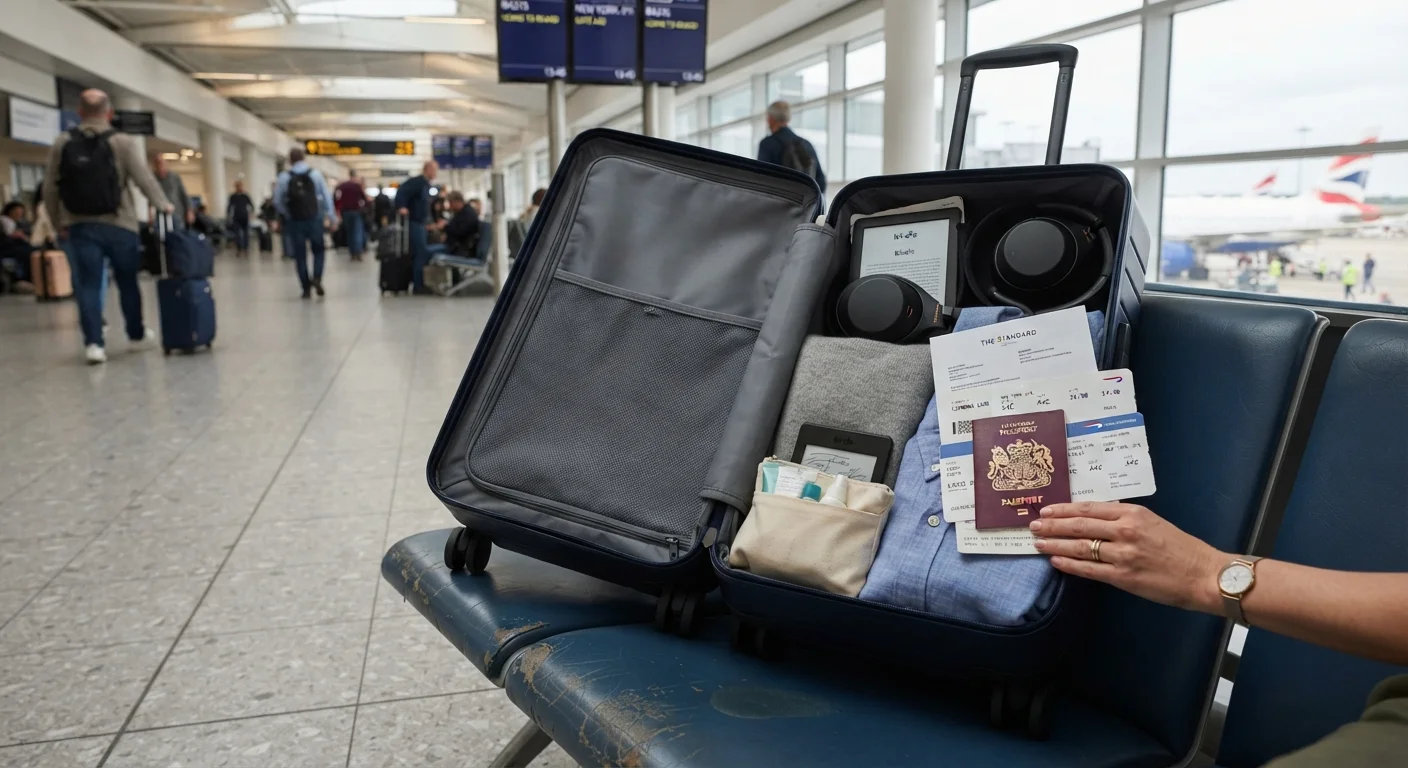
Always keep critical documents in your carry-on, including prescriptions, travel insurance paperwork, and any medication that needs to stay with you - these should never be left to the risk of a checked bag going missing.
Before You Zip: Final Checks That Prevent Gate Problems
Airline size and weight rules for carry-ons vary more than most travelers realize - domestic US carriers, international carriers, and budget airlines all use different dimensions and enforce them with different levels of consistency. Checking the specific airline's policy before every trip (not just once and memorizing it) is a habit frequent flyers don't skip.
Building this kind of pre-trip planning routine into every departure - not just major international trips - is what separates travelers who breeze through airports from those who scramble at the gate. Done consistently, carry-on-only travel stops feeling like a sacrifice and starts feeling like the obvious default.
See the full pre-departure checklist to make sure nothing slips through the cracks before you head to the airport.