
The Core Difference: One State vs. Dozens of Islands
Hawaii is a single US state made up of eight main islands, each with its own character but unified under American governance, the US dollar, and English as the primary language. The Caribbean, by contrast, encompasses more than two dozen independent nations and territories - from French-administered Martinique to Dutch Sint Maarten to independent Barbados - each with its own currency, entry rules, and cultural identity.
This distinction matters practically. Hawaii delivers predictability: the same legal framework, health infrastructure, and consumer protections you'd expect anywhere in the US. The Caribbean rewards curiosity - different languages, cuisines, and atmospheres await on nearly every island - but requires more pre-trip research to navigate correctly. Before booking any Caribbean destination, verify current entry requirements directly with official government sources, as visa rules and documentation requirements vary by island and can change.
For readers weighing this for the first time, our domestic vs. international trip guide lays out the broader considerations in detail.
Cost Landscape: What to Actually Budget For
Hawaii typically carries a higher overall price tag, driven largely by transpacific flight costs and the expense of importing nearly all goods to the islands. Accommodations, groceries, and dining skew noticeably higher than mainland US averages. Travelers from the West Coast have a clear advantage here - Los Angeles to Honolulu is roughly five to six hours - but East Coasters absorb both a longer flight and a higher airfare.
Caribbean costs vary enormously by island. All-inclusive resorts on some islands can represent strong value, while boutique stays on smaller or more exclusive islands can rival Hawaii's prices. The key variable is your departure airport: East Coast and Southeast US travelers often find Caribbean flights considerably shorter and cheaper than Hawaii alternatives.
| Criterion | Hawaii | The Caribbean |
|---|---|---|
| Passport required (US citizens) | No | Yes (most islands) |
| Flight time from East Coast | ~10-11 hours | ~3-5 hours |
| Flight time from West Coast | ~5-6 hours | ~7-9 hours |
| Currency | US Dollar | Varies by island |
| Overall cost level | Higher | Varies widely |
| Landscape variety | Volcanic, rainforest, beaches | Primarily beaches and reefs |
| Hurricane risk | Low | Moderate (Jun-Nov) |
| Cultural diversity | Single Polynesian-American identity | Highly varied by island |
Whatever destination you choose, building a realistic cost picture before you book is essential. Our travel budget planning guide walks through the categories most travelers underestimate.
Scenery, Activities, and What Each Does Best
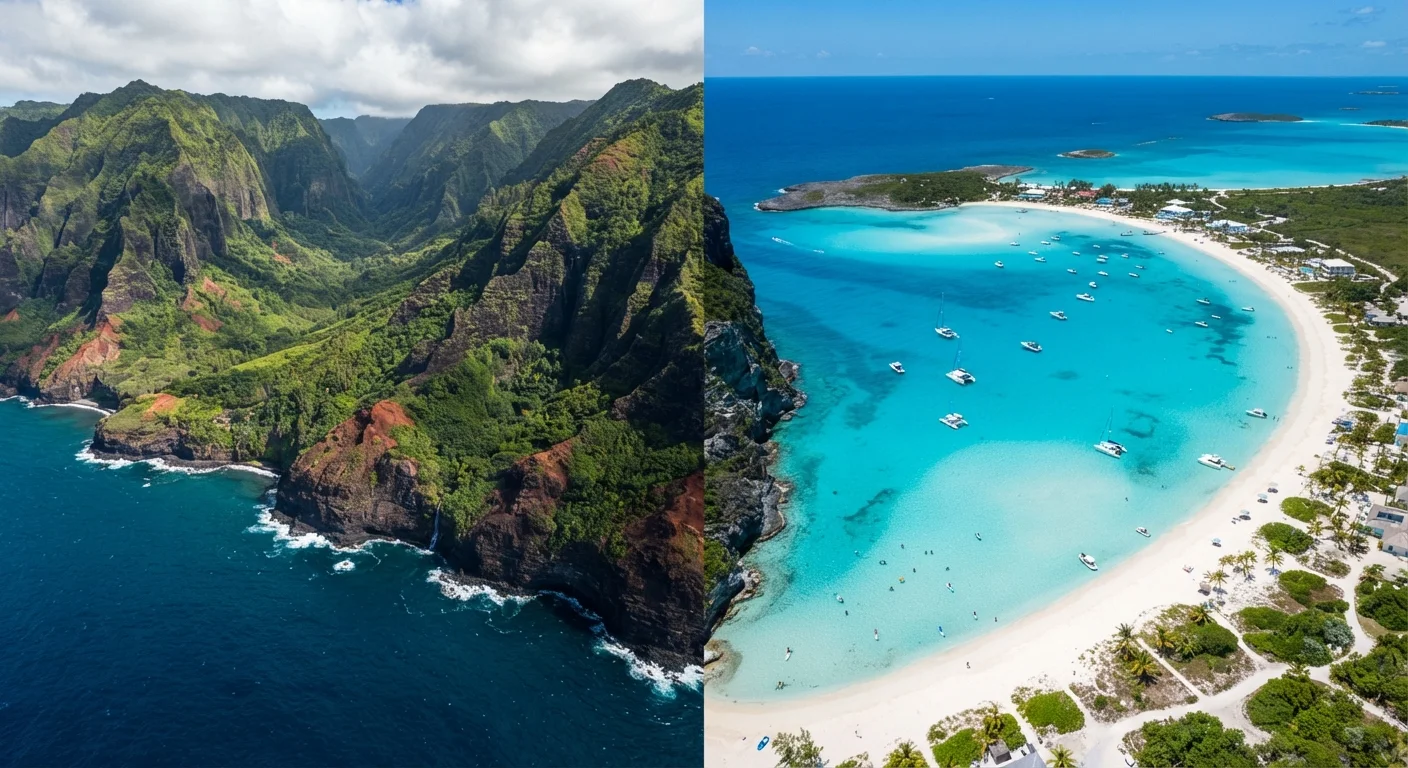
Hawaii's draw is its geological drama. The Big Island hosts active lava flows, while Kauai offers sea cliffs and rainforest valleys. Maui balances beach culture with road-to-Hana wilderness. Snorkeling, surfing, and hiking coexist in a way few destinations anywhere match. Hawaiian culture - rooted in Polynesian traditions - is meaningfully distinct from the American mainland and worth engaging with respectfully and thoughtfully.
The Caribbean's strongest suit is its variety of beach experiences and its warm, reef-protected waters ideal for snorkeling and diving. Specific islands punch above their weight in particular categories: the British Virgin Islands for sailing, Bonaire for scuba diving, Puerto Rico for city culture alongside beaches. The region's African, European, and indigenous cultural blends also produce distinct music, food, and festivals that vary dramatically island to island.
8 main islands
Major islands in Hawaii
Each of Hawaii's eight main islands has a distinct character, from Oahu's urban energy to the Big Island's volcanic wilderness.
30+
Caribbean island nations and territories
The Caribbean encompasses more than 30 distinct political entities, each with its own entry rules, culture, and travel logistics.
Jun-Nov
Caribbean hurricane season window
NOAA designates June 1 through November 30 as Atlantic hurricane season, with peak activity typically in August and September.
For travelers weighing nature immersion against urban energy, our city break vs. nature retreat framework offers a useful lens.
Timing, Seasons, and the Off-Season Calculus
Hawaii's weather is remarkably stable year-round, with the main variables being wetter north and east shores during winter months and slightly higher visitor volumes during summer and school holidays. Hurricane risk is low compared to the Caribbean.
The Caribbean's peak season runs roughly December through April, driven by North American and European winter escapes. Its official hurricane season spans June through November, with peak storm risk concentrated in August and September. Traveling during shoulder periods - May or late November - can significantly lower costs, but requires flexibility and solid travel insurance.
Travel Insurance Is Worth Evaluating Carefully
Caribbean hurricane season makes travel insurance a more pressing consideration than it might be for a Hawaii trip. Policies vary widely in what they cover - trip cancellation, interruption, and weather-related delays are the categories most relevant here. Read policy terms carefully and verify coverage specifics before purchasing. This is general information; consult your insurance provider for advice suited to your situation.
Understanding how seasonal timing actually affects pricing and crowds is worth studying carefully. Our guide to off-season travel realities breaks down how to read these patterns honestly.