
Why Dress Codes Still Matter
Dress codes are not about gatekeeping fashion-they're a shared communication system. When a host specifies attire, they're signaling the tone of the event and giving guests a chance to arrive feeling appropriately prepared. Reading that signal confidently means you spend less mental energy worrying about your outfit and more time being present.
The challenge is that dress code language is rarely standardized. What one company calls 'business casual' another treats as 'smart casual.' A wedding invitation's 'festive attire' depends heavily on the couple's taste and venue. This reference explains the most common codes, what they typically expect, and where flexibility exists.
For a broader foundation in building a wardrobe that reflects who you are, see the Personal Style From the Ground Up hub, which ties together all aspects of intentional dressing.
| Most Formal Code | White Tie (also called Full Evening Dress) |
| Most Misunderstood Code | Business Casual - interpretations vary widely by industry and employer |
| Black Tie Standard | Tuxedo or dinner jacket; floor-length or formal cocktail dress |
| Smart Casual Key Signal | Intentional, put-together outfits without strict formality |
| Cocktail Length | Typically knee to midi length for dresses |
| Business Casual Excludes | Denim, athletic wear, and graphic tees (in most standard workplaces) |
The Dress Code Spectrum, Explained
Dress codes run along a spectrum from the ultra-formal to the completely relaxed. Understanding where each falls-and what distinguishes one from the next-removes the guesswork.
Black Tie
The most formal dress code for non-state occasions. Traditionally calls for a tuxedo (or dinner jacket) for men and a floor-length gown or formal cocktail dress for women.
Black Tie Optional
Guests may wear a tuxedo or a formal dark suit with a tie. Women typically choose a formal gown or an elegant cocktail dress. The 'optional' signals latitude, not informality.
Cocktail Attire
A polished, party-appropriate standard: knee-to-midi-length dresses or dressy separates for women; a suit or blazer with trousers for men. More relaxed than black tie, more dressed-up than business casual.
Business Formal
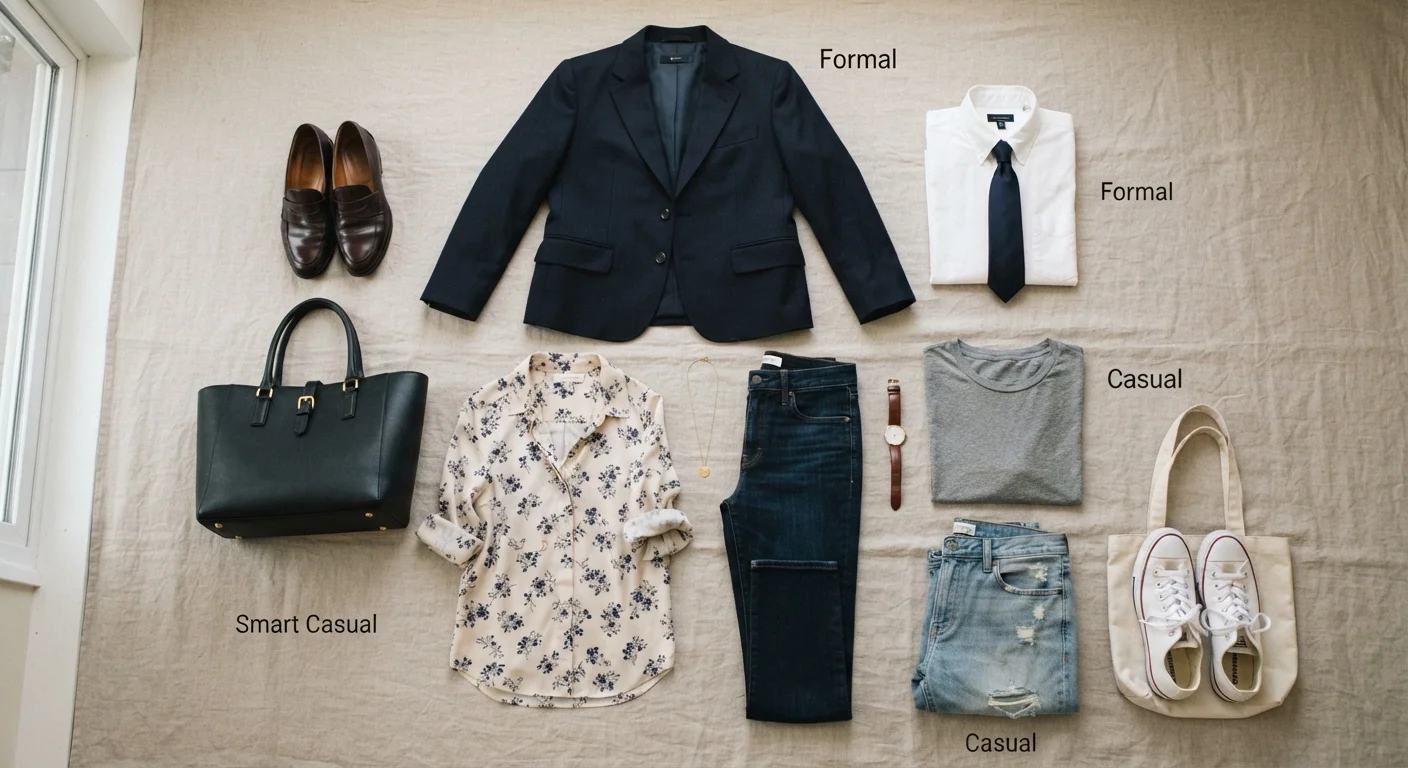
Conservative professional dress-tailored suit and tie for men, a suit or structured dress for women. Neutral or muted colors are expected. Common in law, finance, and executive environments.
Business Casual
Professional but relaxed: dress trousers or chinos, collared shirts, and closed-toe shoes. Excludes denim, athletic wear, and graphic tees unless a specific employer permits them.
Smart Casual
A middle ground between casual and business casual. Think neat, intentional outfits-dark jeans with a blazer, or a midi skirt with a structured knit. Effort is visible without being formal.
Festive Attire
Seasonal or celebratory dressing, usually holiday-themed. Invitations often welcome rich colors, metallics, and playful patterns while still expecting a polished finish.
Casual
Relaxed, everyday clothing with no specific restrictions. Comfort takes priority, though 'casual' on an invitation still generally implies clean, neat, and context-appropriate clothing.
White Tie sits above black tie and is rare outside state dinners and the most formal galas. It calls for tailcoats for men and full-length ball gowns for women. Unless an invitation explicitly states white tie, assume black tie is the ceiling for most formal occasions.
Cocktail Attire trips up many readers because it occupies a clear but often uncommunicated middle tier. The key cues: polished fabrics (silk, crepe, structured knits), heeled or dressy flat footwear, and avoiding anything that reads as workwear or streetwear.
Business Casual may be the most debated code in professional life. The safest interpretation remains tailored trousers or neat chinos, collared shirts or structured blouses, and closed-toe shoes. When a new employer's dress code feels ambiguous, observe what senior colleagues wear before leaning casual.
When in Doubt, Ask the Host
Dress codes can vary by region, venue, and host preference. If an invitation lists an unfamiliar term or the event feels ambiguous, a brief message to the host is always appropriate. Arriving appropriately dressed signals respect for the occasion-and for the people hosting it.
Making Dress Codes Work for Your Style
Meeting a dress code doesn't mean erasing your personal style-it means expressing it within defined parameters. Cocktail attire, for example, can be fulfilled by a tailored jumpsuit, a midi wrap dress, or a blazer-and-trousers set, depending on what fits your body and your aesthetic.
Proportion and fit consistently matter more than the specific garment. A well-fitted blazer elevates smart casual; a flowing dress in a quality fabric reads as cocktail-appropriate. For guidance on how fit interacts with how you feel in your clothes, the article Dressing for Your Body Shape separates useful guidance from outdated prescriptions.
Dress codes also respond to personal intention. The principles behind Dressing With Intention-building a wardrobe around clarity rather than trends-apply directly here. Knowing your go-to cocktail outfit or your reliable business casual formula saves time and reduces decision fatigue across every future invitation.
When a code is genuinely unclear, defaulting slightly more formal is rarely a mistake. Overdressing is easier to adjust at the event than underdressing, and confidence in your appearance tends to carry the rest.