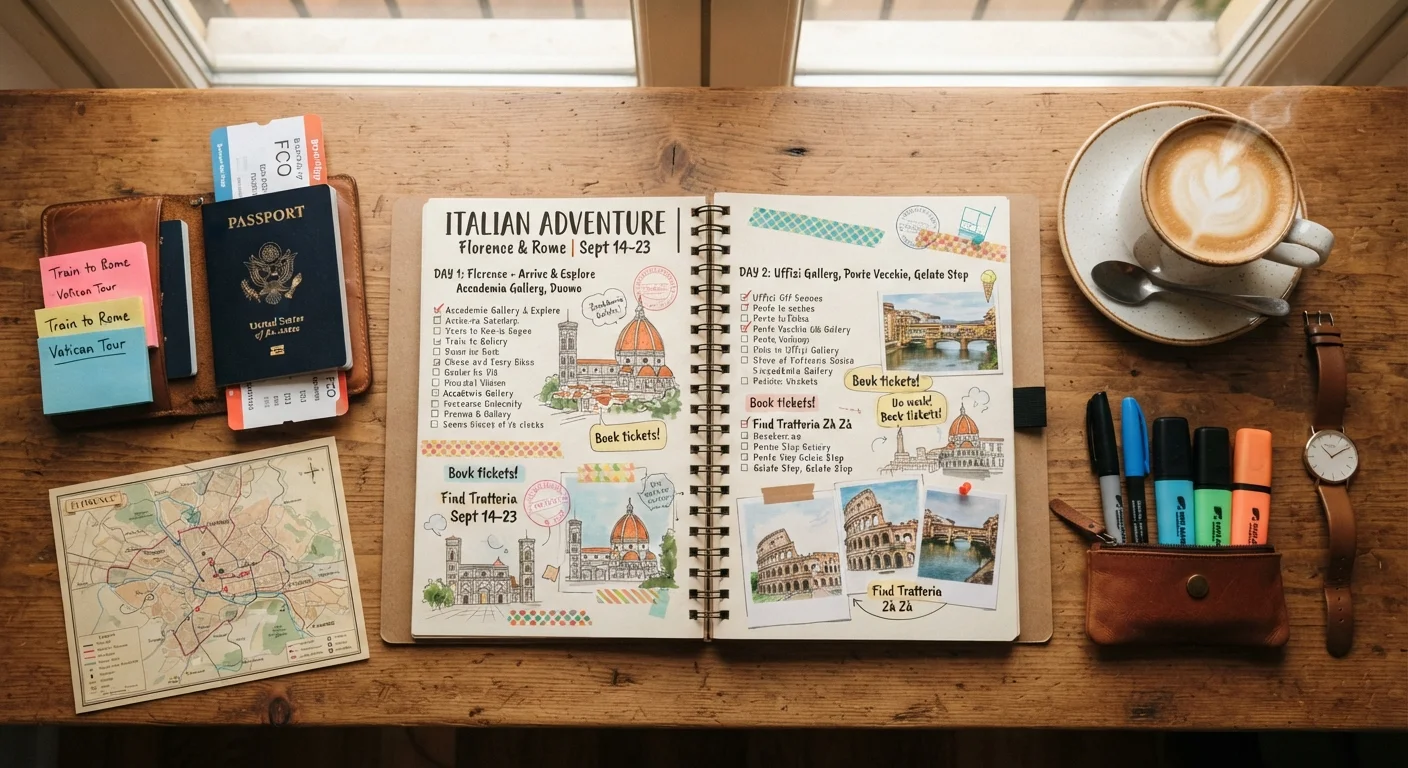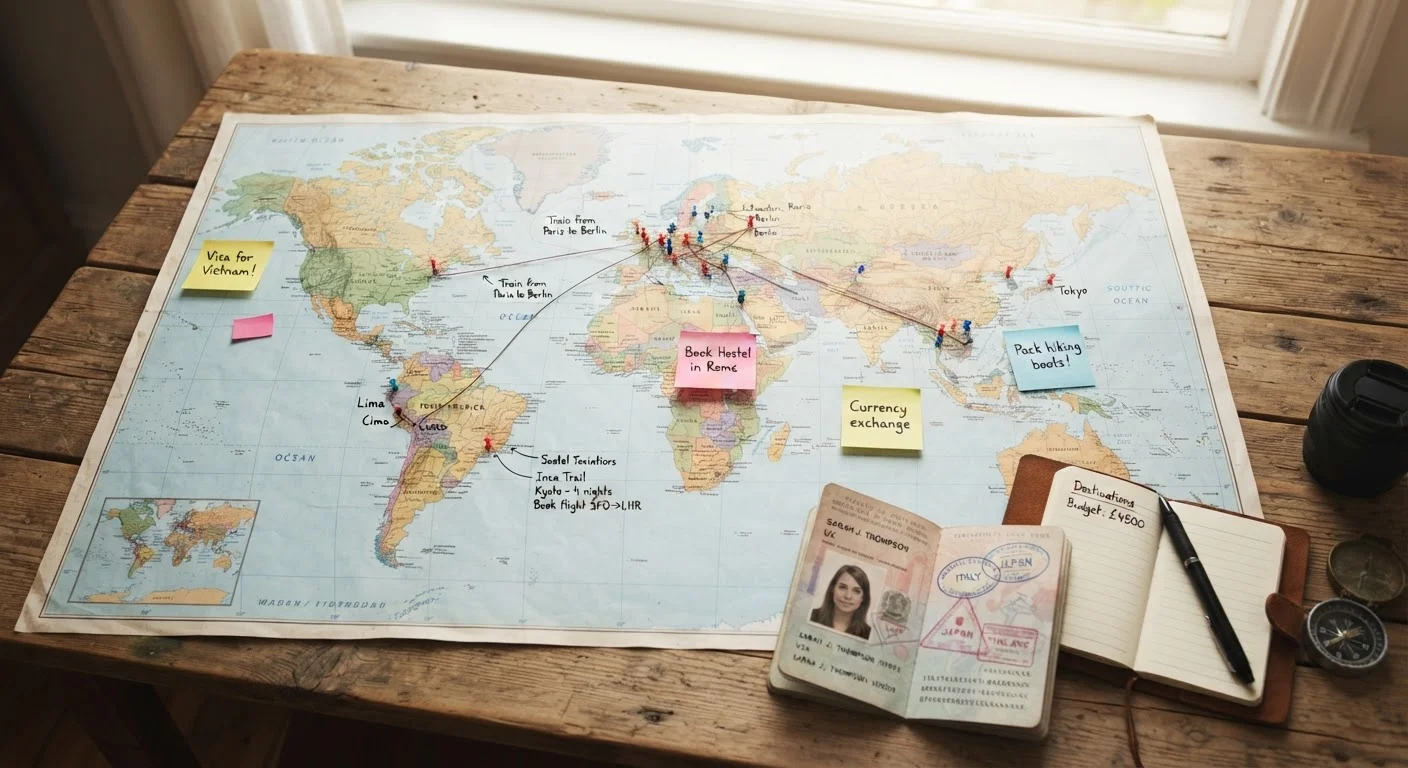

The Hidden Cost of Doing Too Much
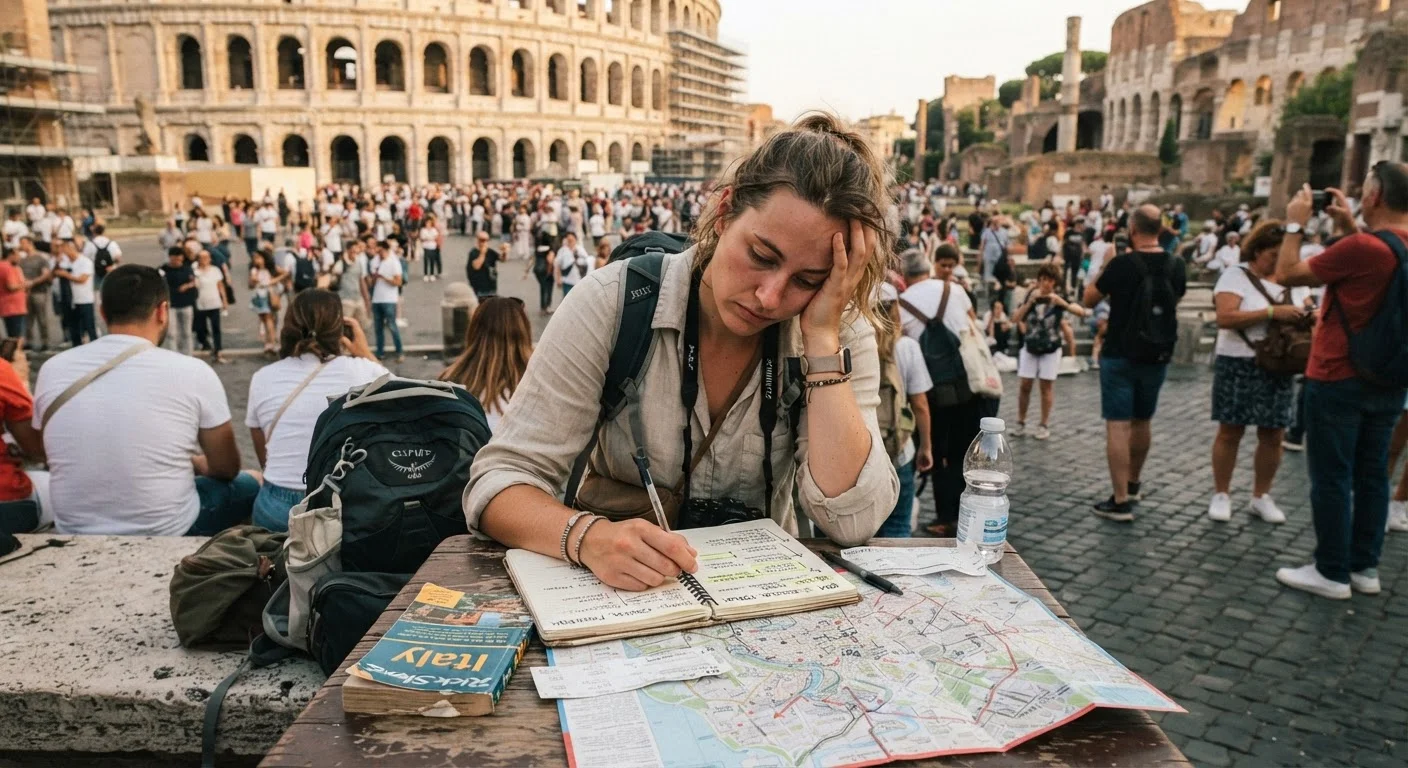
Itinerary overload doesn't announce itself in advance. It shows up as a midday argument about whether to skip the museum, a dinner eaten standing up because the reservation was at a place no one wanted to walk to anymore, or a final night in a beautiful city spent too tired to go outside. The trip looked great on paper. The experience told a different story.
This is one of the most widespread planning errors American travelers make - and one of the most underestimated. The problem isn't ambition. It's the gap between how travel looks on a spreadsheet and how it actually feels on the ground. Narrowing that gap starts with understanding exactly where plans go wrong.
For a fuller picture of what separates a chaotic trip from a well-structured one, the anatomy of a well-built travel itinerary is worth reading alongside this piece. And if you've noticed your trips consistently feeling rushed, why your last trip felt so rushed breaks down the pacing problem in detail.
More Stops Don't Mean More Value
A packed itinerary can create the illusion of a productive trip while actually reducing the quality of every experience within it. Racing from attraction to attraction leaves little room to absorb where you are - which is usually the whole point of traveling. Depth, not density, is what most travelers remember fondly months later.
Common Itinerary Mistakes - and How to Fix Them
The mistakes below aren't rare. They show up in nearly every over-packed trip, across every type of traveler. Recognizing them before you finalize your plan is the most effective way to avoid a trip that looks rich but feels hollow.
Scheduling activities back-to-back with no transition time between them.
Why it happens: Planners focus on the activity itself and forget that getting there, finding parking or transit, and simply arriving oriented all consume real time.
Treating every destination on a list as equally essential to visit.
Why it happens: Recommendation lists - whether from travel sites, social media, or guidebooks - present dozens of options without indicating which are genuinely worth a traveler's limited time.
Failing to account for meals, rest, and basic daily logistics as time costs.
Why it happens: When planning from home, it's easy to mentally skip over the hour it takes to find a restaurant, order, eat, and get moving again - let alone an afternoon nap after a red-eye flight.
Adding extra destinations to a multi-stop trip without restructuring the whole plan.
Why it happens: One new city or stop seems like a small addition in isolation, but it compresses time at every other destination already on the list.
Planning at peak energy levels without accounting for how fatigue accumulates over a trip.
Why it happens: Itineraries are built at a desk at home, not on day four of walking 15,000 steps in summer heat. The version of you that planned the trip is not the version that has to execute it.
Transit Time Is Almost Always Underestimated
Moving between cities, neighborhoods, or attractions takes far longer than maps suggest - especially when accounting for traffic, public transit delays, security lines, or simply getting oriented in an unfamiliar place. If your itinerary has back-to-back activities in different parts of a city or region, buffer time isn't optional. A single delay can cascade and compromise the rest of your day.
One pattern worth noting: many of these mistakes are reinforced by the kind of travel content that's most visible online. What the internet gets wrong about travel planning explores how widely shared advice often encourages overloading rather than restraint.
Building Breathing Room Into Your Schedule
Counterintuitively, the trips that feel the most rewarding are rarely the ones with the most checked boxes. They're the ones where travelers had enough time in each place to notice something unexpected - a street market not in any guidebook, a conversation with a local, an afternoon that went sideways in the best possible way.
62%
Travelers who felt rushed on their last trip
According to a traveler sentiment survey cited by the U.S. Travel Association, a majority of American leisure travelers reported feeling their trips were too rushed to fully enjoy.
3-4 hrs
Average meaningful time at a major attraction
Travel researchers suggest most visitors to large museums or cultural sites need three to four hours to engage meaningfully - far more than the one hour many itineraries allocate.
That kind of flexibility doesn't happen by accident. It's planned for. Leaving room for spontaneity inside a structured itinerary shows how experienced travelers build structure without eliminating the space that makes travel feel alive.
The practical starting point is simple: look at your current draft itinerary and ask which items would survive a one-hour delay or a tired afternoon. The ones that wouldn't are candidates for cutting - or at minimum, for moving to a part of the trip when you'll realistically have the energy for them. For broader guidance on smart planning habits, the trip planning hub is a useful ongoing reference.