
Why Timing Actually Matters in Self-Care
Self-care routines are most effective when they work with your body's natural rhythms rather than against them. Your skin, hormones, and stress-response systems all behave differently depending on the time of day - a concept known as circadian biology. Applying the same steps morning and night, or skipping one entirely, means missing the biological window each routine is designed to match.
This isn't about adding complexity. It's about doing the right things at the right time so that even a simple three-step habit actually delivers results. For a broader look at how daily anchors affect overall wellbeing, see our guide to morning vs. evening anchors.
| Criterion | Morning Routine | Night Routine |
|---|---|---|
| Primary purpose | Protection and defense | Repair and restoration |
| Skin state at start | Post-repair, transitioning to defense | Accumulation of daily stressors, debris |
| Key ingredient focus | Antioxidants, SPF, lightweight hydration | Retinoids, exfoliants, rich moisturizers |
| Cleansing intensity | Gentle rinse or mild cleanse | Thorough; double cleanse often recommended |
| Hormonal context | Cortisol rising; sebum production peaks midday | HGH released; cell turnover increases during sleep |
| Mental/behavioral role | Signals alertness and readiness for the day | Signals wind-down; supports sleep onset |
| Sunscreen use | Essential - cannot be skipped | Not required or appropriate |
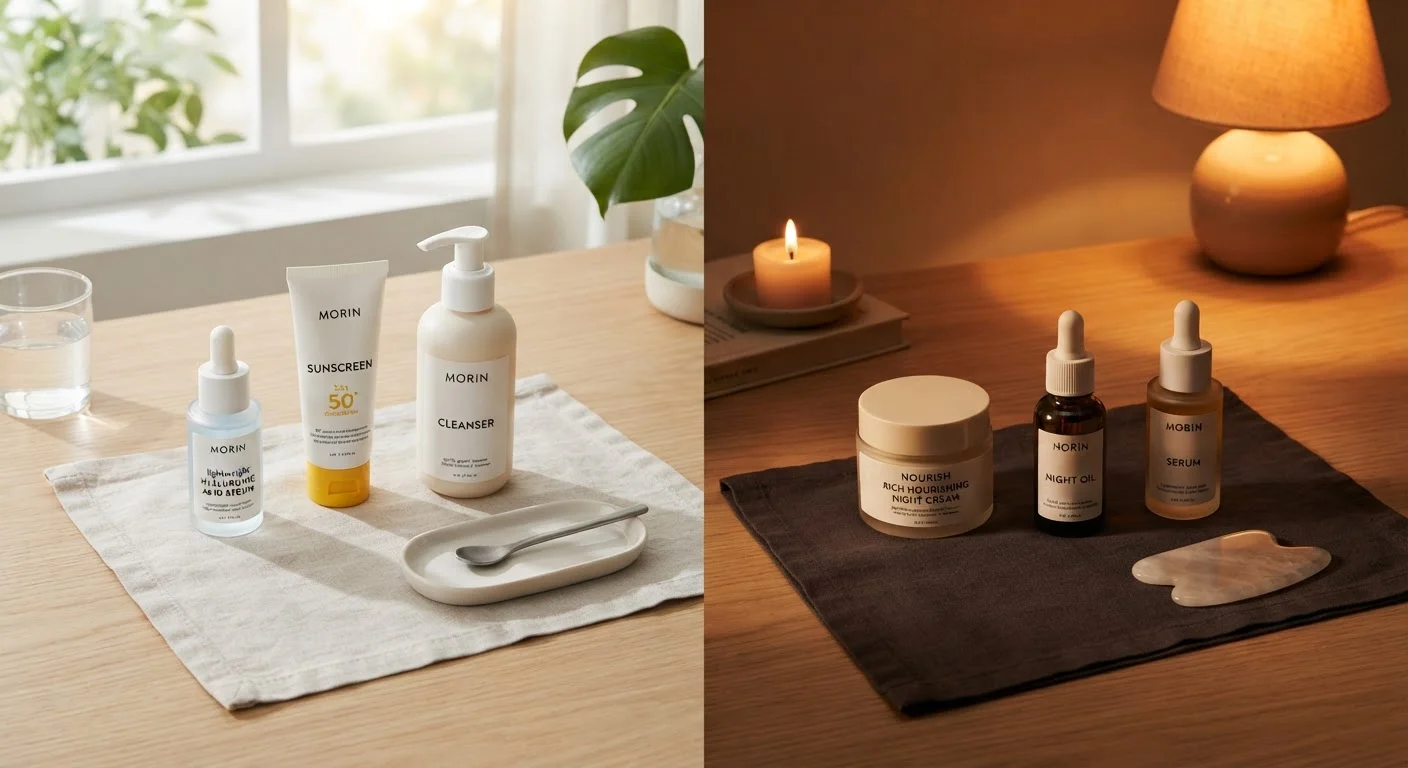
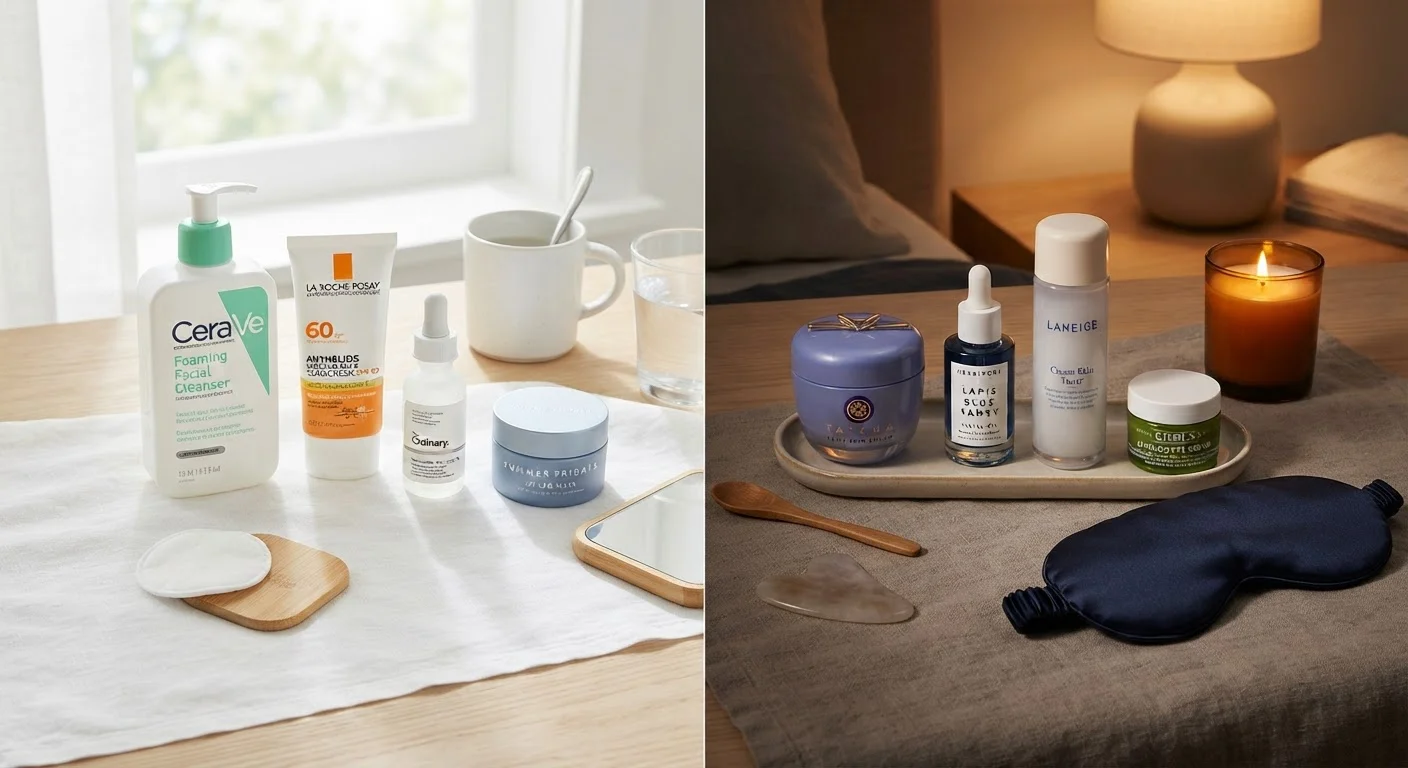
What a Morning Routine Is Actually Doing
In the morning, your skin has just spent several hours in repair mode. Now it needs to transition to defense mode. Cortisol - often called the stress hormone - rises naturally in the early morning, priming your body for alertness. Sebum (your skin's natural oil) production also peaks in the mid-morning hours, which is why some people notice their skin looks shinier by midday.
A well-structured morning routine addresses these conditions directly:
- Cleansing: A gentle rinse or light cleanse removes any overnight product residue without stripping the skin barrier rebuilt during sleep.
- Antioxidant support: Ingredients like vitamin C are generally better used in the morning, where they can help neutralize free radicals generated by UV and pollution exposure throughout the day.
- Broad-spectrum SPF: Sunscreen is non-negotiable in the morning. It cannot be replaced by a nighttime step.
Keep morning steps lightweight - heavy occlusives or potent actives like retinoids are better saved for later. For practical strategies on fitting this into a packed schedule, the guide to building a morning routine on busy days is worth reading.
~80%
Of premature skin aging attributed to UV exposure
According to research published in dermatology literature, photoaging from the sun accounts for the majority of visible premature skin aging - underlining why daily morning SPF is foundational.
2-3×
Increase in skin cell renewal rate during sleep
Skin cell mitosis (division) is estimated to be significantly higher at night compared to daytime, according to circadian biology research - which is why nighttime is the optimal window for repair-focused ingredients.
What a Night Routine Is Actually Doing
While you sleep, your body enters a state of active restoration. Human growth hormone (HGH) is released, collagen synthesis increases, and skin cell turnover accelerates. Skin temperature rises slightly, which improves the absorption of topical ingredients. Evening is the biological window for repair - and a thoughtful night routine is designed to work alongside it, not interrupt it.
Core elements of an effective night routine typically include:
- Thorough cleansing: Removing sunscreen, makeup, and accumulated pollutants is essential. Double cleansing (an oil-based cleanser followed by a gentle foaming wash) is often recommended for those who wear SPF or makeup regularly.
- Targeted actives: Retinoids (vitamin A derivatives) and exfoliating acids are generally best used at night. Retinoids in particular degrade in sunlight, and can increase photosensitivity - making nighttime the appropriate application window.
- Rich hydration: Heavier moisturizers, face oils, and occlusive balms are well-suited to nighttime, when they can work without interfering with makeup or SPF wear.
For a deeper breakdown of how your skin's needs shift overnight on a product-by-product level, see our AM vs. PM skincare guide.
A Note on Retinoids and Sun Sensitivity
Retinoids are among the most well-researched topical ingredients for skin renewal, but they come with important caveats. They increase skin's sensitivity to UV radiation, which is one key reason dermatologists consistently recommend applying them at night. If you're new to retinoids or have sensitive skin, consult a dermatologist before starting - introduction frequency and formulation strength matter significantly.
Building Both Into a Realistic Daily Habit
The goal isn't a 12-step routine at each end of the day. Consistency with three or four well-chosen steps will outperform an elaborate routine that gets abandoned by Wednesday. Think of each routine as a small commitment that signals something to your body: the day is beginning or the day is done.
That psychological signal matters as much as the products themselves. Research on habit formation consistently shows that anchoring new behaviors to existing ones - like a morning routine after waking or an evening routine after brushing teeth - dramatically improves adherence. Keep each routine short enough that skipping it never feels justified.
Explore the full framework for everyday habit-building through our Everyday Habits hub, or browse skincare and beauty routine guidance at the Beauty Routines hub.
This article is for general informational purposes only and is not a substitute for personalized advice from a qualified dermatologist or healthcare professional. If you have a skin condition or medical concern, please consult a licensed professional before changing your skincare routine.