

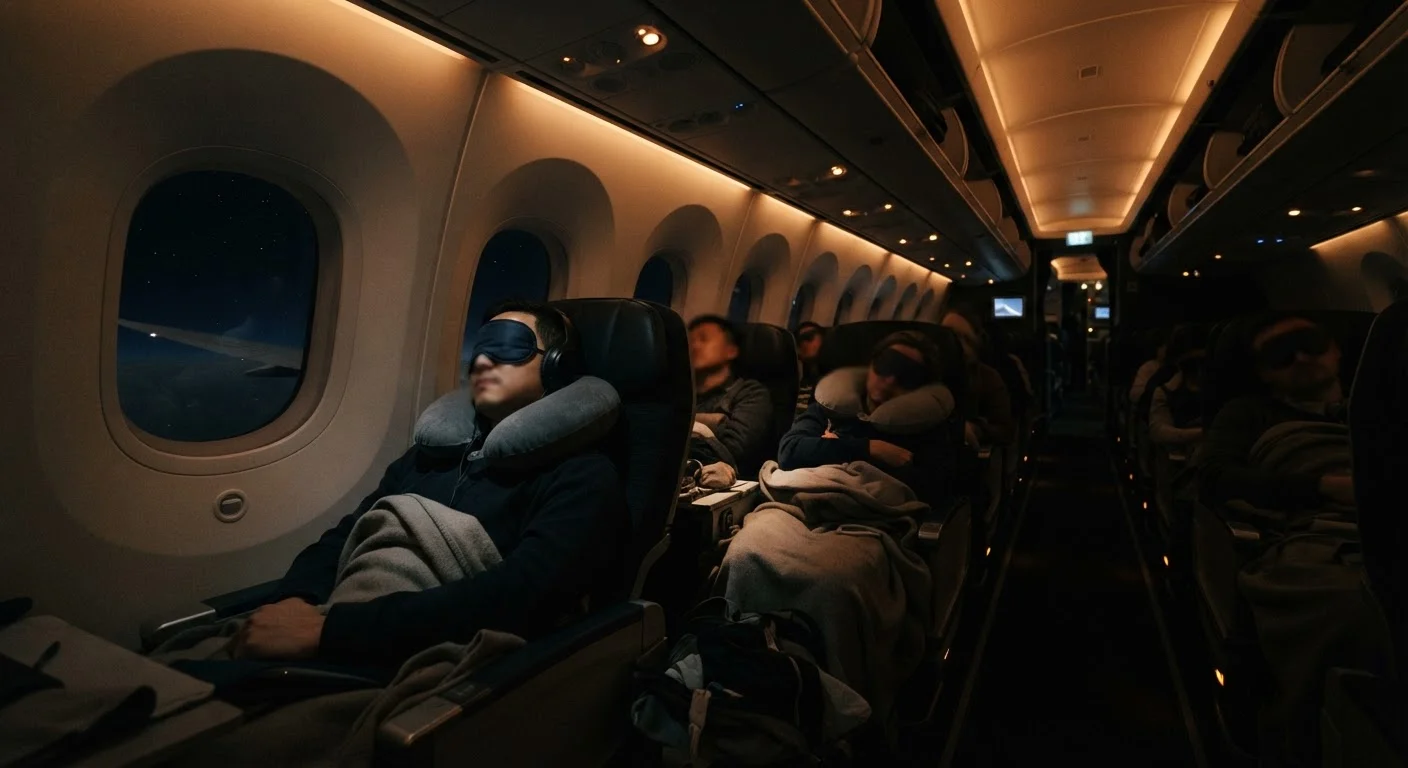
What a Red-Eye Flight Actually Is
A red-eye flight departs late at night - typically between 9 p.m. and 1 a.m. - and arrives the following morning. The name comes from the bloodshot eyes that often greet passengers on landing. These routes are common on transcontinental U.S. corridors (think New York to Los Angeles) and on long-haul international flights where overnight travel aligns with time zones.
They're frequently marketed as a clever workaround: fly while you sleep, wake up at your destination, skip a hotel night. That pitch has genuine merit in some situations. But it glosses over variables that matter a lot to real travelers. Before you assume a red-eye is the smart move, it's worth understanding both what you gain and what you're giving up.
For a broader look at how common travel assumptions hold up, see common travel myths examined.
The Real Advantages
Often lower fares than peak daytime flights
Overnight departure times see softer demand, which can translate into meaningfully lower base prices on competitive routes - though this varies by airline and season.
Preserves a full day at your destination
Arriving in the morning rather than the afternoon or evening gives you hours you'd otherwise spend in transit, particularly valuable on shorter trips.
Quieter airports and faster security
Late-night departures typically mean shorter lines and a less stressful pre-boarding experience compared to midday travel peaks.
Can eliminate one hotel night
Sleeping on the plane - even partially - can reduce the total number of accommodation nights needed, which matters when hotel costs are high at your destination.
Sometimes the only nonstop option available
On certain routes, overnight flights are among the few nonstop services offered, making overnight timing a practical necessity rather than a strategic choice.
The cost and schedule benefits are legitimate. Red-eye flights often carry lower base fares because demand during overnight hours is softer. You also avoid burning a vacation day in transit - landing at 6 a.m. means you can check in, freshen up, and be out exploring by mid-morning. For shorter trips where every hour counts, that matters.
Airports and security lines are typically quieter at departure time, which reduces pre-flight stress. And on some routes, red-eyes are among the only nonstop options available, making the overnight timing a practical necessity rather than a preference.
The Hidden Downsides
Sleep quality in economy is rarely adequate
Upright or semi-reclined seats, cabin noise, and inconsistent lighting make it difficult to achieve deep, restorative sleep - even for travelers who consider themselves good sleepers.
Arrival exhaustion can undercut your plans
Landing depleted affects decision-making, physical energy, and mood. On short trips especially, a bad arrival day can color the entire experience.
Risk of worsened jet lag on long-haul routes
Combining overnight travel with a significant time-zone shift can compound jet lag rather than soften it, particularly when flying eastward.
No guaranteed savings if you need recovery sleep
If you spend the first hotel night catching up on missed sleep, the theoretical cost savings from skipping a night may not materialize as planned.
Harder on older travelers and those with health conditions
Disrupted sleep, cramped positioning, and low cabin humidity can be more taxing for travelers managing chronic conditions or recovering from illness - consult a healthcare provider if relevant.
The core problem is simple: most people don't sleep well on planes. Economy seats aren't designed for horizontal rest, cabin noise and light disrupt sleep cycles, and even passengers who do doze usually accumulate far less restorative sleep than a full night at home. For a closer look at what overnight travel does to your body's internal clock, here's what's actually happening with jet lag.
Arriving exhausted has cascading effects. You may be too tired to enjoy day one, make poor decisions (overspending, skipping meals, missing logistics), or spend the first hotel night catching up on sleep you expected to get on the plane. On short trips, that's a significant portion of your total time.
Plan Your Arrival Day Carefully
If you book a red-eye, treat arrival morning as a transition period rather than a full productive day. Schedule check-in as early as possible, keep the first afternoon light, and avoid back-to-back commitments. This is especially important on multi-stop itineraries where exhaustion compounds across legs.
If you're building a detailed itinerary that includes a red-eye as the opening leg, factor in a buffer day or a relaxed first morning. Multi-destination trip planning especially benefits from this kind of recovery padding.
Who Should (and Shouldn't) Book One
Red-eyes tend to work well for travelers who sleep reliably on planes, are taking trips long enough to absorb one rough arrival day, or have a specific reason to preserve daytime hours - like attending an event the morning after landing. Business travelers with flexible schedules and experienced flyers who've refined their in-flight sleep setup often report positive experiences.
They tend to work poorly for light sleepers, families traveling with young children, travelers with early-morning commitments on arrival day, or anyone whose trip is short enough that arriving depleted would meaningfully reduce enjoyment. Before committing, be honest about your own sleep patterns - not your idealized version of how well you think you'll sleep.
~35%
Adults who report trouble sleeping outside home
U.S. survey data consistently finds a significant portion of adults experience disrupted sleep in unfamiliar environments, which airplane cabins exacerbate further.
6-8 hrs
Typical transcontinental red-eye flight duration
Flights like New York to Los Angeles run roughly 5.5 to 6.5 hours - theoretically enough for sleep, but boarding, taxi, and landing procedures reduce actual rest time significantly.
If you're still in the early stages of building out your travel plans, a realistic travel budget framework can help you weigh whether the fare savings actually justify the trade-offs in your specific situation.